
Subfamily FORMICINAE obscure rover ant Author: Joe A. MacGown |
||
 |
 |
 |
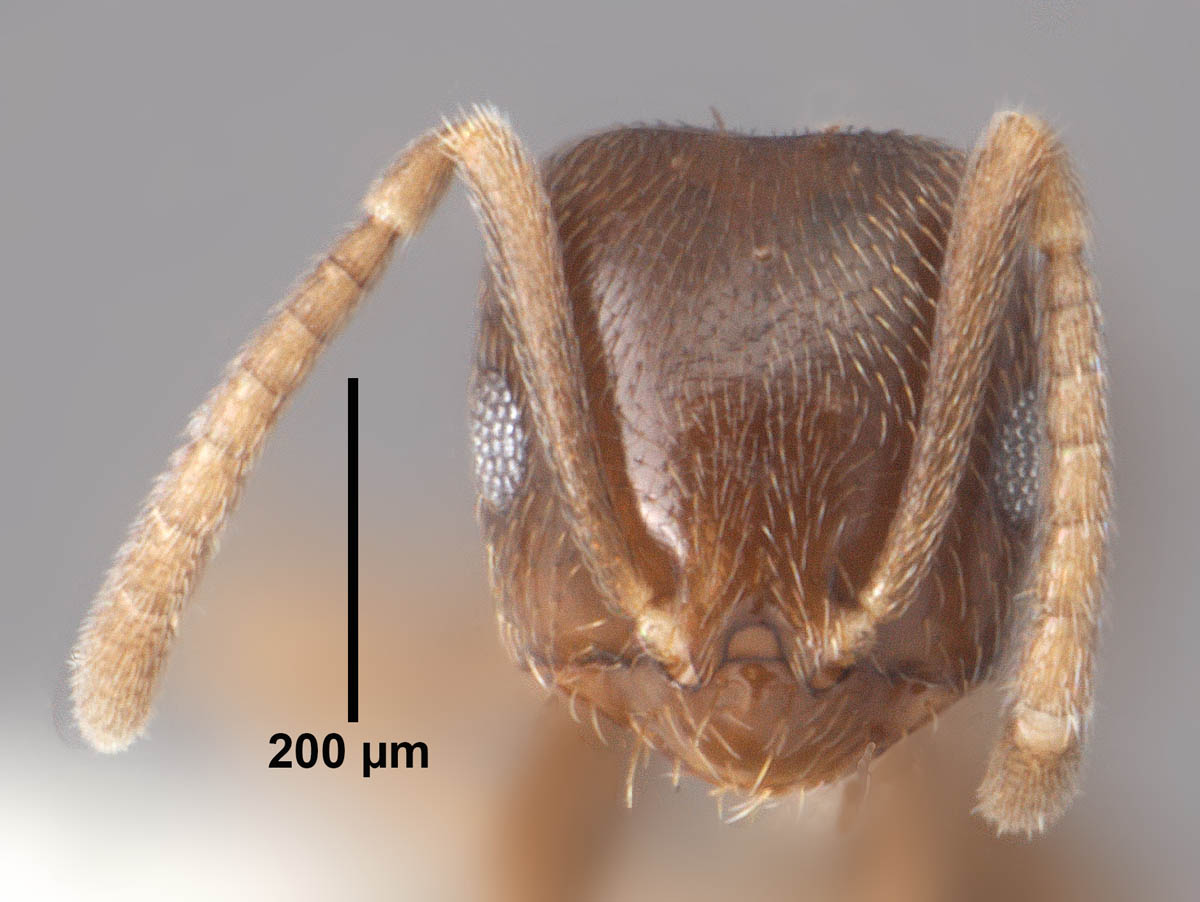
Brachymyrmex obscurior, full face view of the head of a worker (Photo by James Lewis and Joe A. MacGown) |
Brachymyrmex obscurior, profile view of the head of a worker (Photo by James Lewis and Joe A. MacGown) |
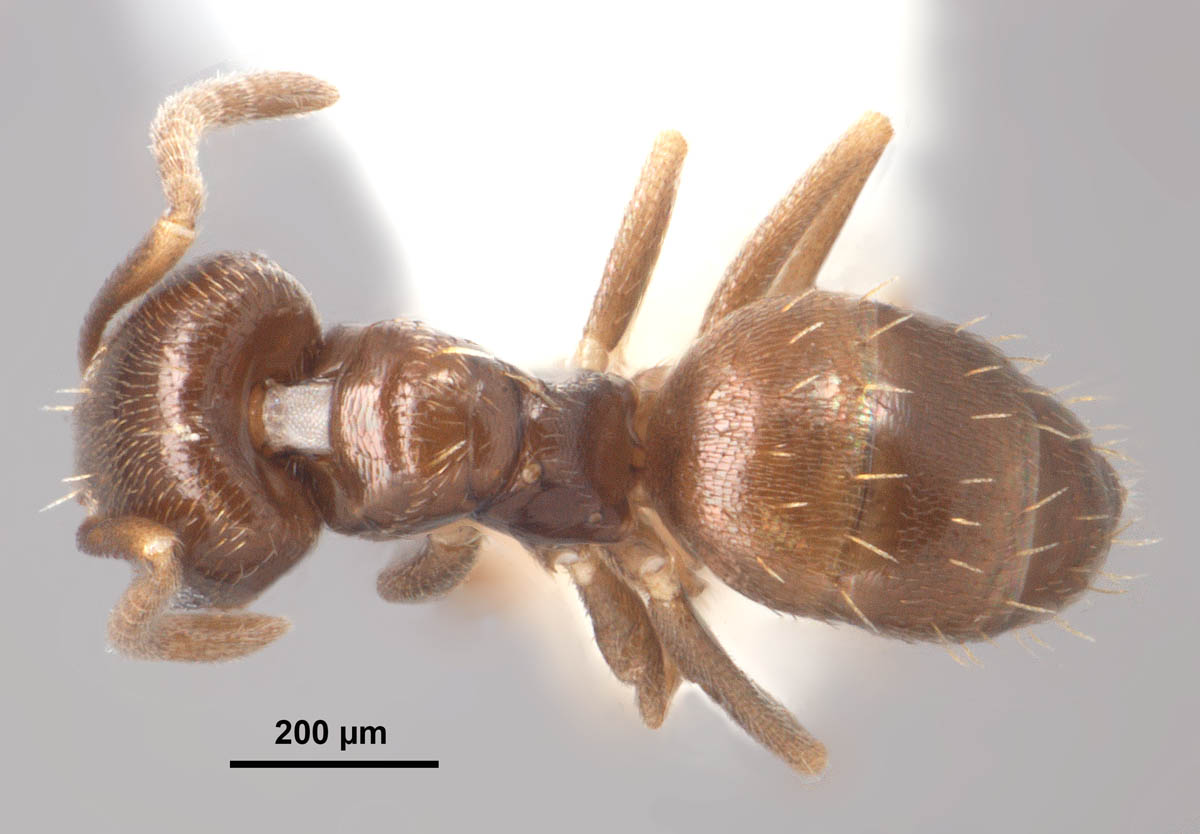
Brachymyrmex obscurior, dorsal view of the head of a worker (Photo by James Lewis and Joe A. MacGown) |
 |
 |
 |
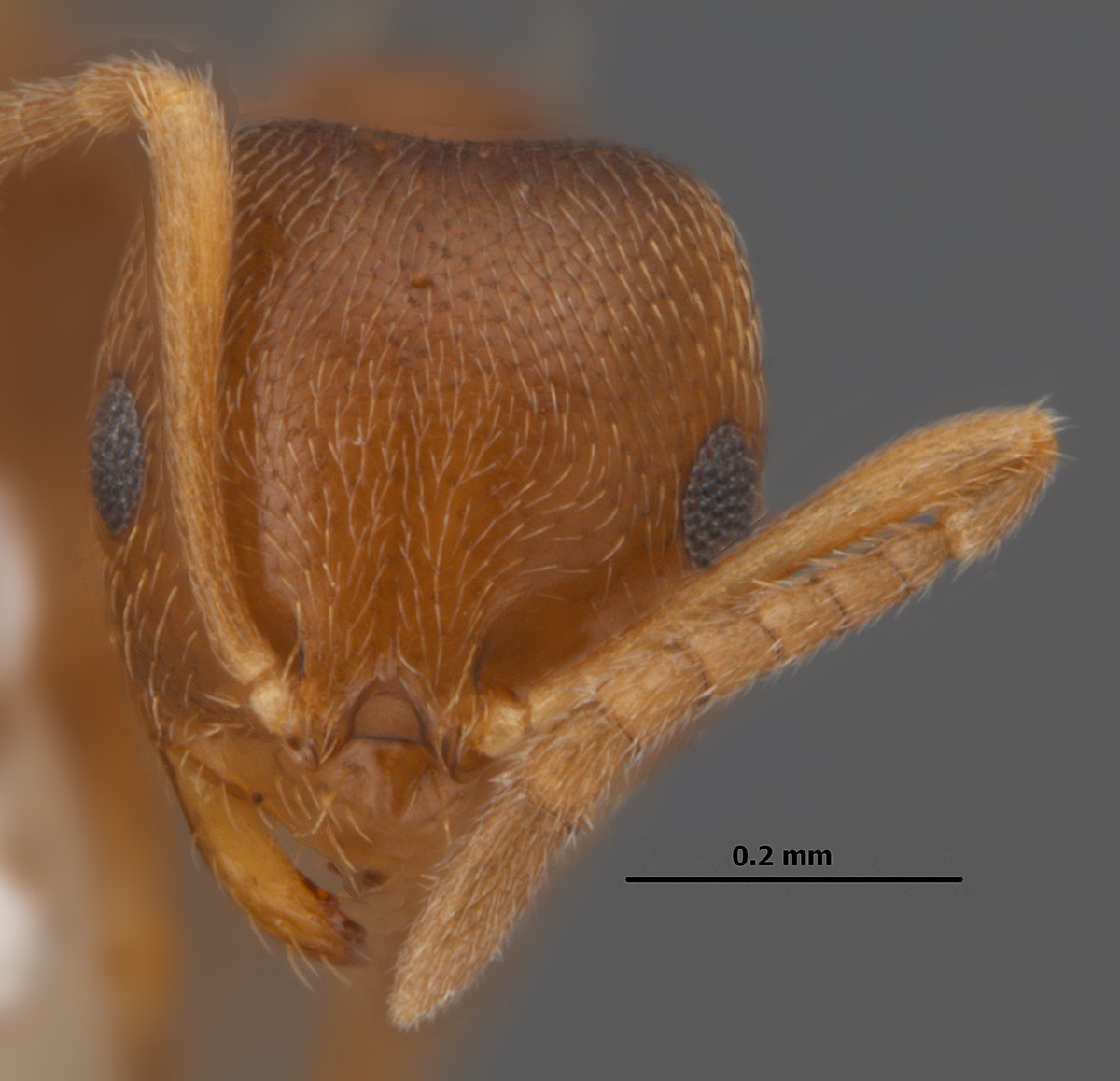
Brachymyrmex obscurior, full face view of the head of a worker (Photo by Joe A. MacGown) |
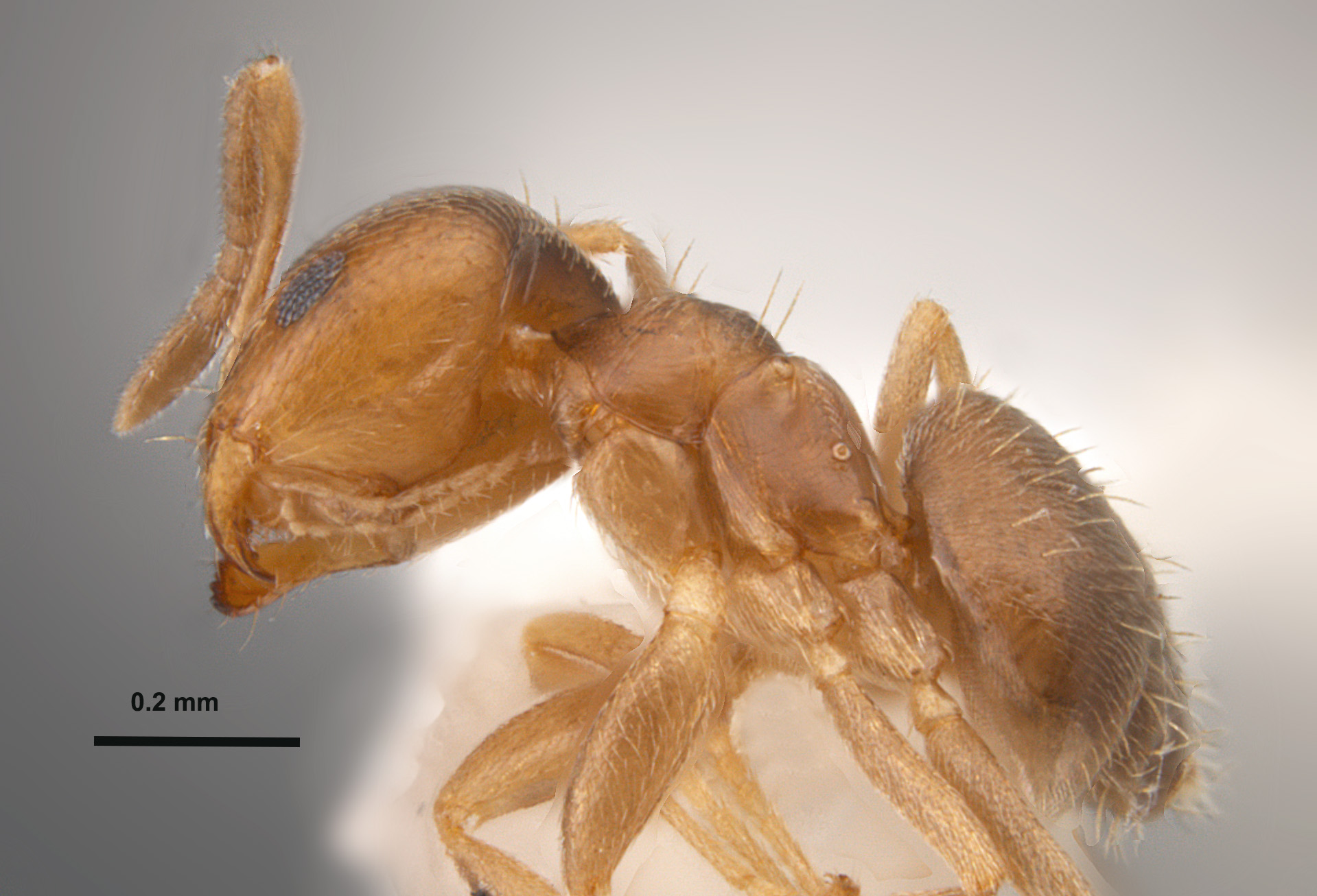
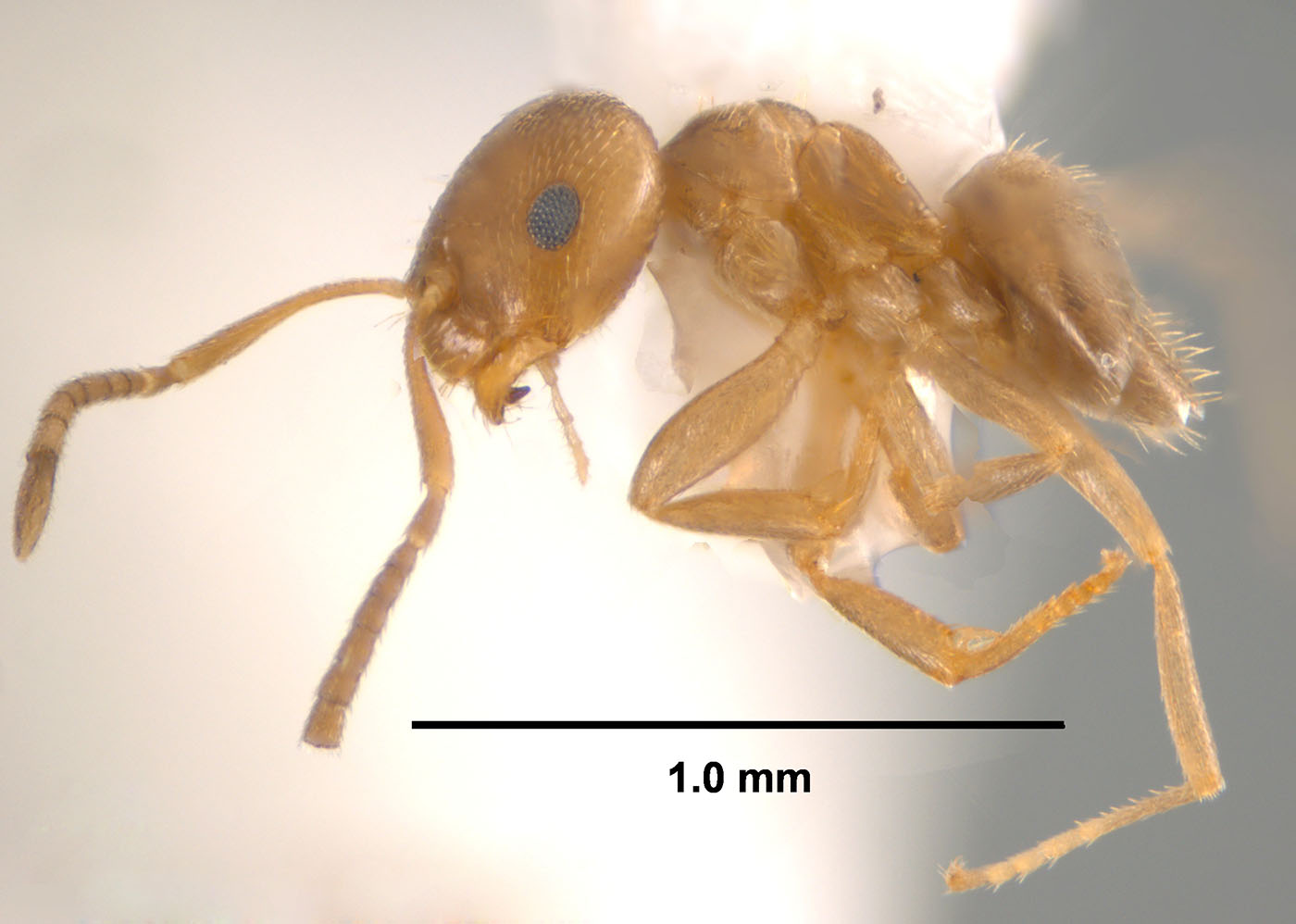
Brachymyrmex obscurior, profile view of a worker (Photo by Joe A. MacGown) |
Brachymyrmex obscurior, profile view of a worker (Photo by Joe A. MacGown) |
 |
 |
 |
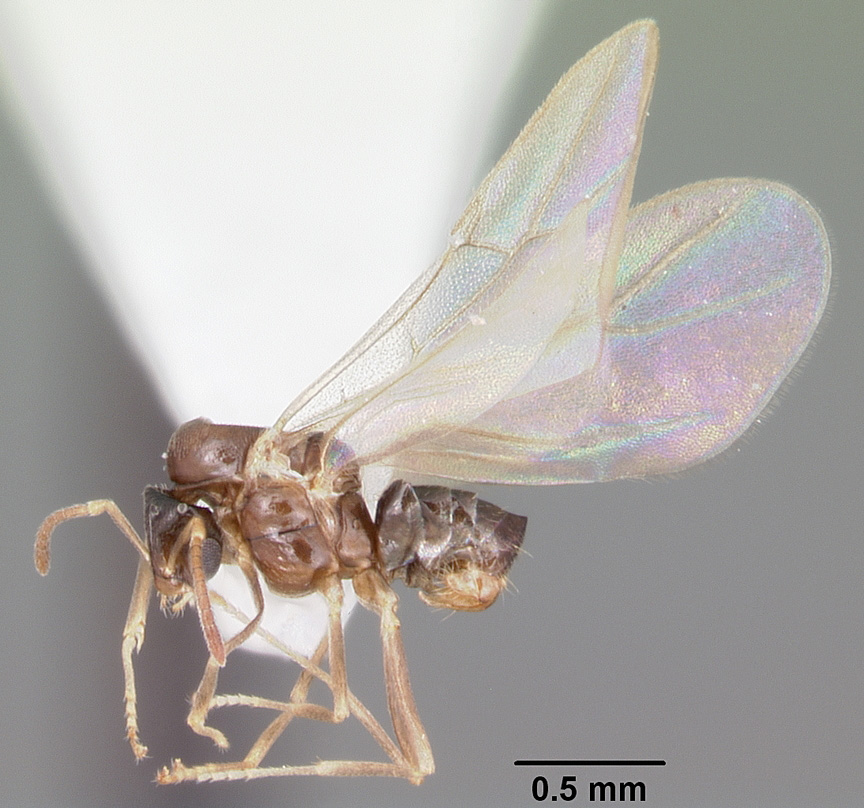
Brachymyrmex obscurior, profile view of a male Photo courtesy of http://www.antweb.org/. |
Brachymyrmex obscurior, profile view of a female Photo courtesy of http://www.antweb.org/. |
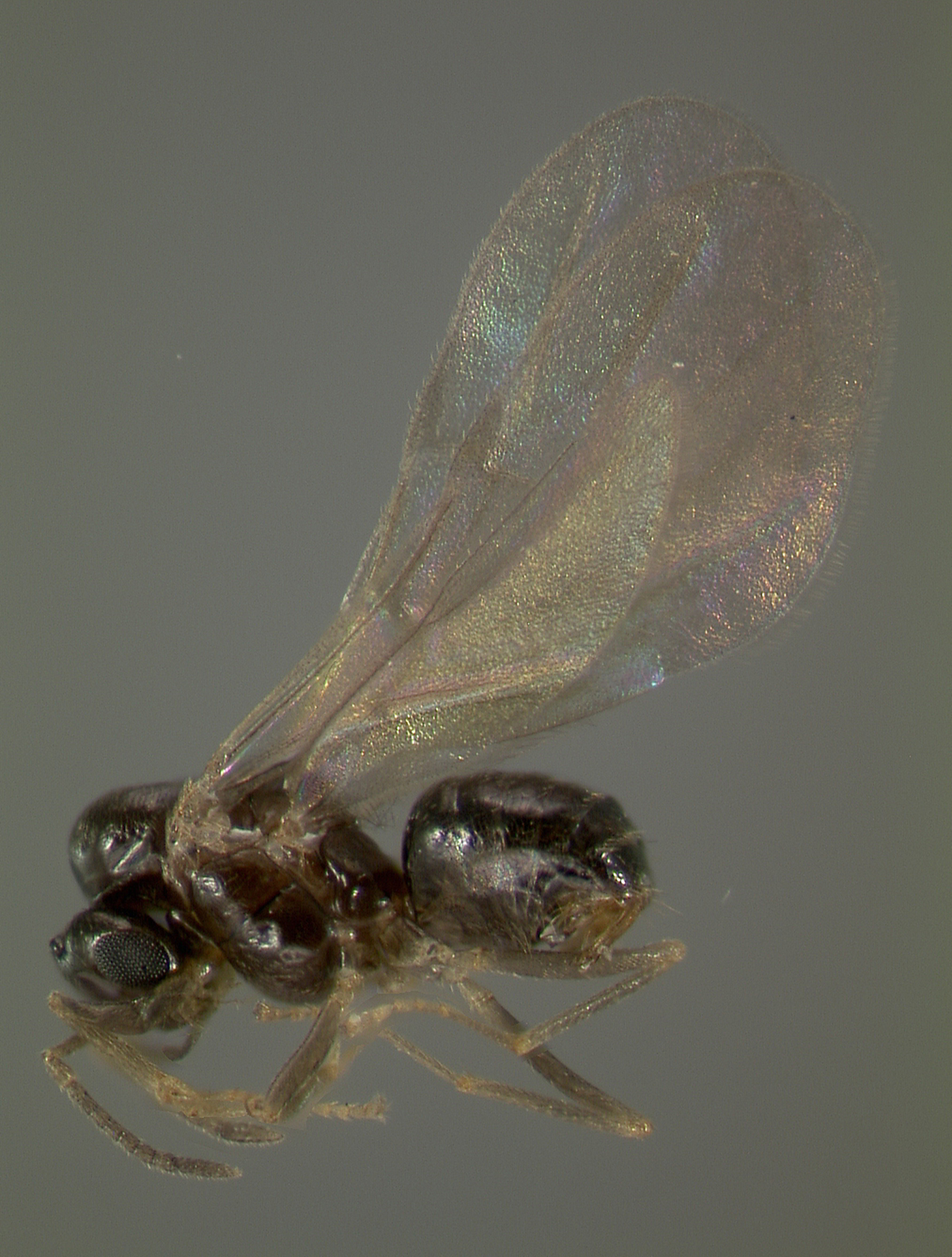
Brachymyrmex obscurior, profile view of a male (Photo courtesy of Lyle Buss) |
 |
||
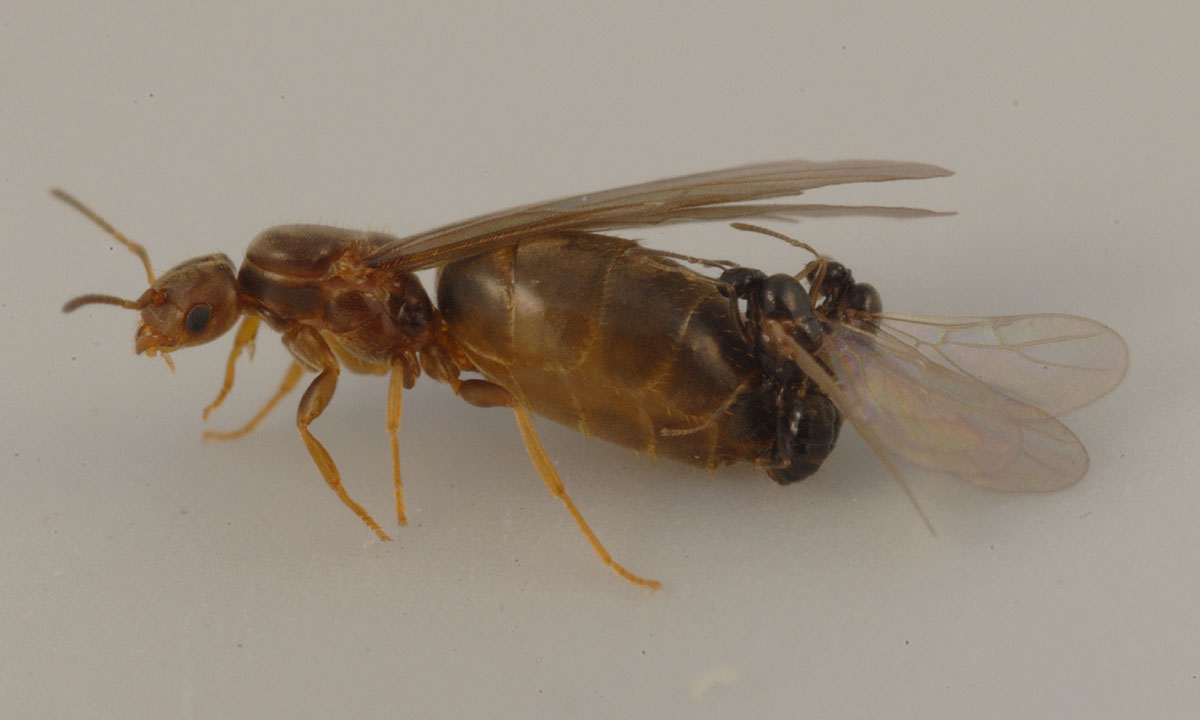
Brachymyrmex obscurior, two males attempting to mate
with a female (Photo courtesy of Lyle Buss) |
||
Introduction Brachymyrmex species can be identified by their one-segmented petiole, the presence of an acidopore, and their nine-segmented antennae. Brachymyrmex obscurior is a minute yellowish-brown to brown species native to the Neotropics. In the US, it is considered to be an introduced species. In southern Florida, this species is an occasional nuisance pest (Pers. Comm. Mark Deyrup). Taxonomic History (provided by Barry Bolton, 2013) Diagnosis Identification Queen: (Description based on MEM photos). Approximately three times longer than worker (TL 4.0–4.3 mm). Concolorous reddish brown. Head about as wide as long, with dense pubescence; eyes large, length more than 1/4 head length; ocelli present; antenna 9-segmented, lacking club. Mesosoma enlarged, elongated, roundly flattened dorsally; mesosoma with dense, fine pubescence, with scattered, longer, erect setae dorsally. Wings large, clear, with strong venation; fore wing with one submarginal cell, pterostigma present; hind wing lacking closed cells. Waist with a single petiolar node, often hidden by gaster from above. Gaster enlarged, with fine, dense pubescence, longer, stiff erect setae present especially along tergite margins; acidophore present. Male: (Description based on MEM photos). Approximately the same size as workers to slightly larger (TL about 1.5 mm). Color, dark reddish brown to blackish brown. Head slightly wider than long; eyes large, at least 1/2 the length of the head; three large, raised ocelli present; antenna 10-segmented, first funicular segment enlarged, globular; mandibles simple. Mesosoma enlarged, squared (in profile), mesoscutum enlarged, overhanging pronotum; mesosomal dorsum with dense, fine pubescence, larger erect setae absent; pronotum, mesopleura, and propodeum shiny, with reduced setation. Wings large, clear; forewing with one submarginal cell; hindwings with reduced venation. Waist with a single petiolar node, often hidden by gaster from above. Gaster shiny, with scattered fine pubescence and a few larger erect setae along tergite margins. Biology and Economic Importance Despite its supposed rarity in Florida, B. obscurior is listed by Klotz et al. (1995) as being a minor urban pest. Pest Status Distribution Australian: Guam, Hawaii, Marshall Islands, Northern Mariana Islands, Samoa, Solomon Islands, Vanuatu (antweb.org and antwiki.org). U.S. Distribution: AZ, FL, HI, (LA), MS, MO, TX, WA (antweb.org and MEM). Introduced range in US: Confirmed MEM records include specimens from FL, HI, and MS. Antweb also lists GA, LA, MO, and WA. The Louisiana records on AntWeb appear to be based on Dash et al. (2005), who reported this species from that state. However, these records may be in error as identifications were based on taxonomic information for this group that was available at that time, which has been updated since. Joe MacGown examined voucher specimens identified as B. obscurior in the Louisiana State Arthropod Museum and determined them all to be B. patagonicus. Therefore, at this time, records of B. obscurior from Louisiana should be considered dubious. According to Antweb, specimens from Washington were collected from inside greenhouses and butterfly houses, and therefore, this species is not likely established in that region. MacGown has not confirmed records from GA or MO. Acknowledgments Literature Cited Bolton, B. 2013. Bolton World Catalog Ants. Available online: http://www.antweb.org/world.jsp. Accessed 25 November 2013. Dash, S.T., L. M. Hooper-Bui, and M. A. Seymour. 2005. The pest ants of Louisiana. A guide to their identification, biology, and control. Louisiana State University, Louisiana Agricultural Experiment Station, Louisiana Cooperative Extension Service, Pub. 2915. Deyrup, M. 2003. An updated list of Florida ants (Hymenoptera: Formicidae). Florida Entomologist 86: 43-48. Deyrup, M., S. Cover, and L. Davis. 2000. Exotic ants in Florida. Transactions of the American Entomological Society 126 293-325. Forel, A. 1893. Formicides de l'Antille St. Vincent, récoltées par Mons. H. H. Smith. Transactions of the Entomological Society of London 1893: 333-418. Forel, A. 1897. Quelques Formicides de l'Antille de Grenada récoltés par M. H. H. Smith. Transactions of the Entomological Society of London 1897: 297-300. Klotz, J. H., J. R. Mangold, K. M. Vail, L. R. Davis Jr. and R. S. Patterson. 1995. A survey of the urban pest ants (Hymenoptera: Formicidae) of peninsular Florida. Florida Entomologist 78: 109-118. Koptur, S., W. Pascale, and O. Zuriany. 2010. Ants and plants with extrafloral nectaries in fire successional habitats on Andros (Bahamas). Florida Entomologist 93: 89-99. Morrison, L. W. 2006. The ants of small Bahamian cays. Bahamas Naturalist and Journal of Science. 1:2 7-32. Tschinkel, W. R. and C. A. Hess. 1999. Arboreal ant community of a pine forest in northern Florida. Annal of the. Entomological Society of America 92: 63-70. Wilson, E. O. and R. W. Taylor. 1967. The ants of Polynesia (Hymenoptera: Formicidae). Pacific Insects Monograph 14: 1-109. Links AntWeb |
||


MEM | Research Taxa | Introduction | Faunal Lists | Identification | How to Use the Keys | Glossary | Collecting Tips | Specimen Preparation MEM Publications | MEM Ant Publications | Ant Videos | Ant News | MEM Ant Blog | References | Acknowledgments | Links
Author-Joe MacGown: jmacgown@entomology.msstate.edu
The ant web site was uploaded on 6 March 2003 and was last updated on 7 February 2022
(specific pages may have different uploaded and updated dates)
Drawings and photographs by Joe MacGown (unless otherwise noted) and copyrighted by the Mississippi Entomological Museum
The development of this web site was supported in part by the National Institute of Food and Agriculture, United States Department of Agriculture, under Project No. MIS-012040 and the USDA-ARS Areawide Management of Imported Fire Ant Project (Richard L. Brown, Principal Investigator).