
Subfamily PONERINAE trapjaw ant Author: Joe A. MacGown |
||
 |
 |
 |
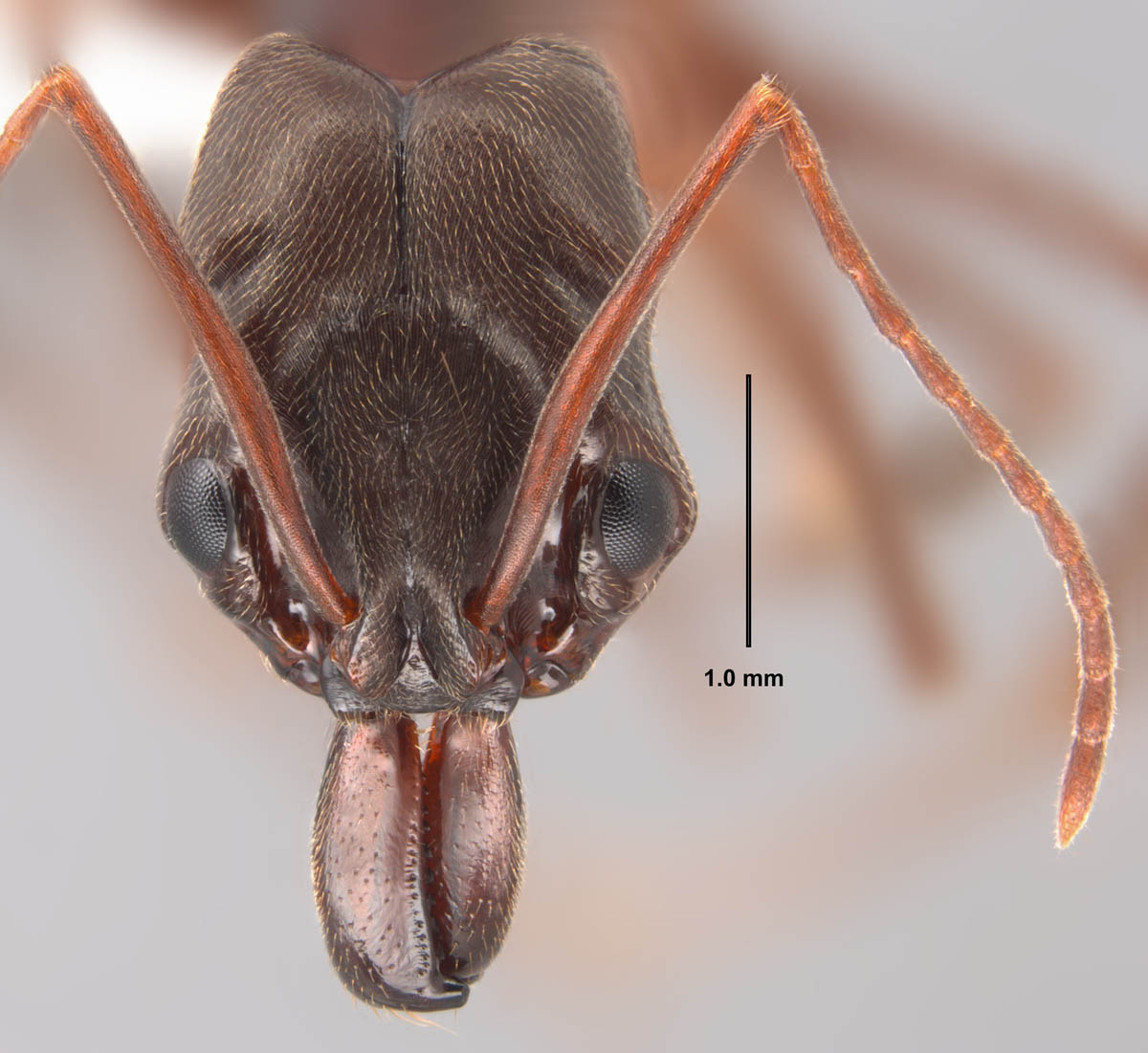
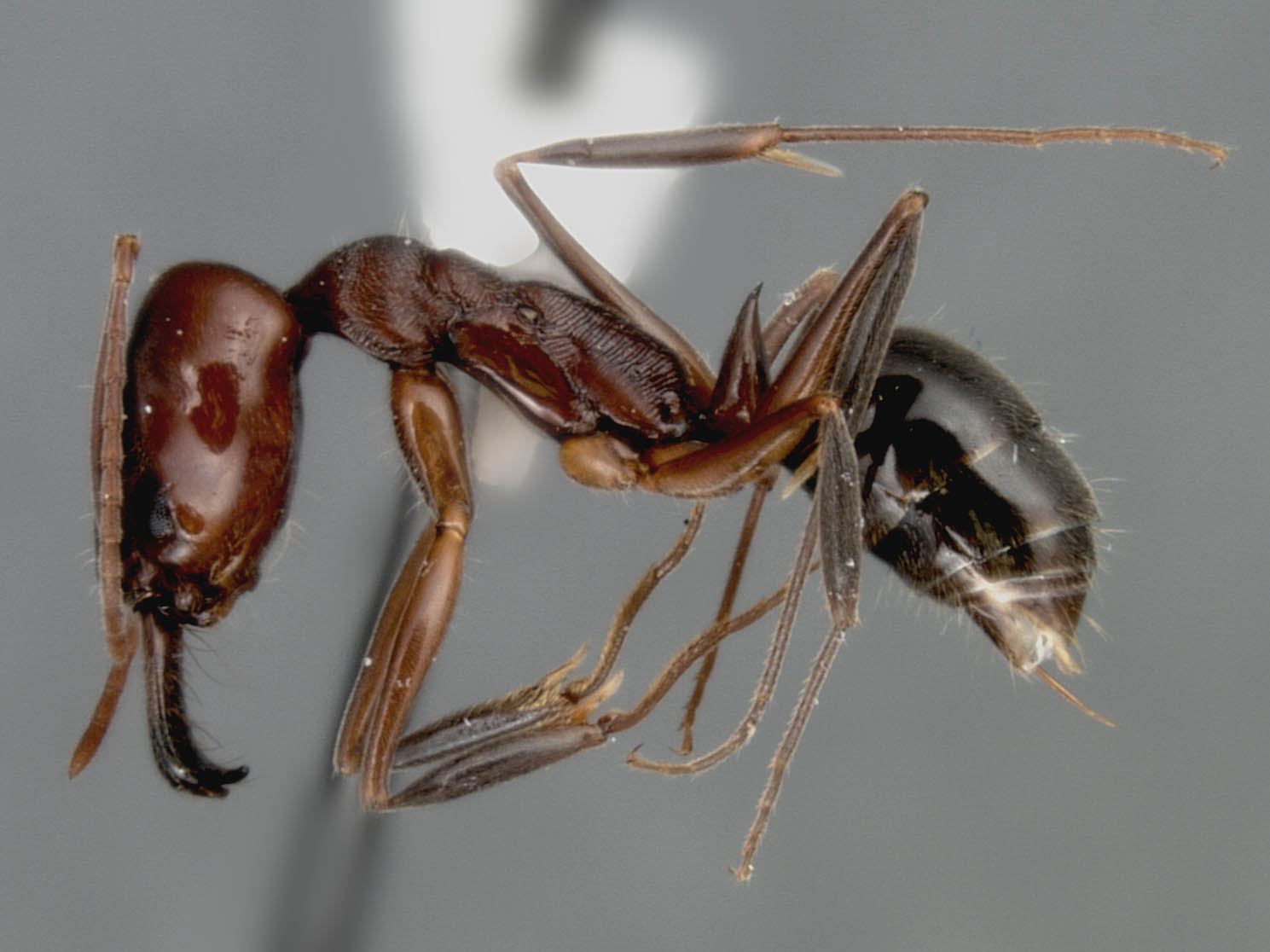
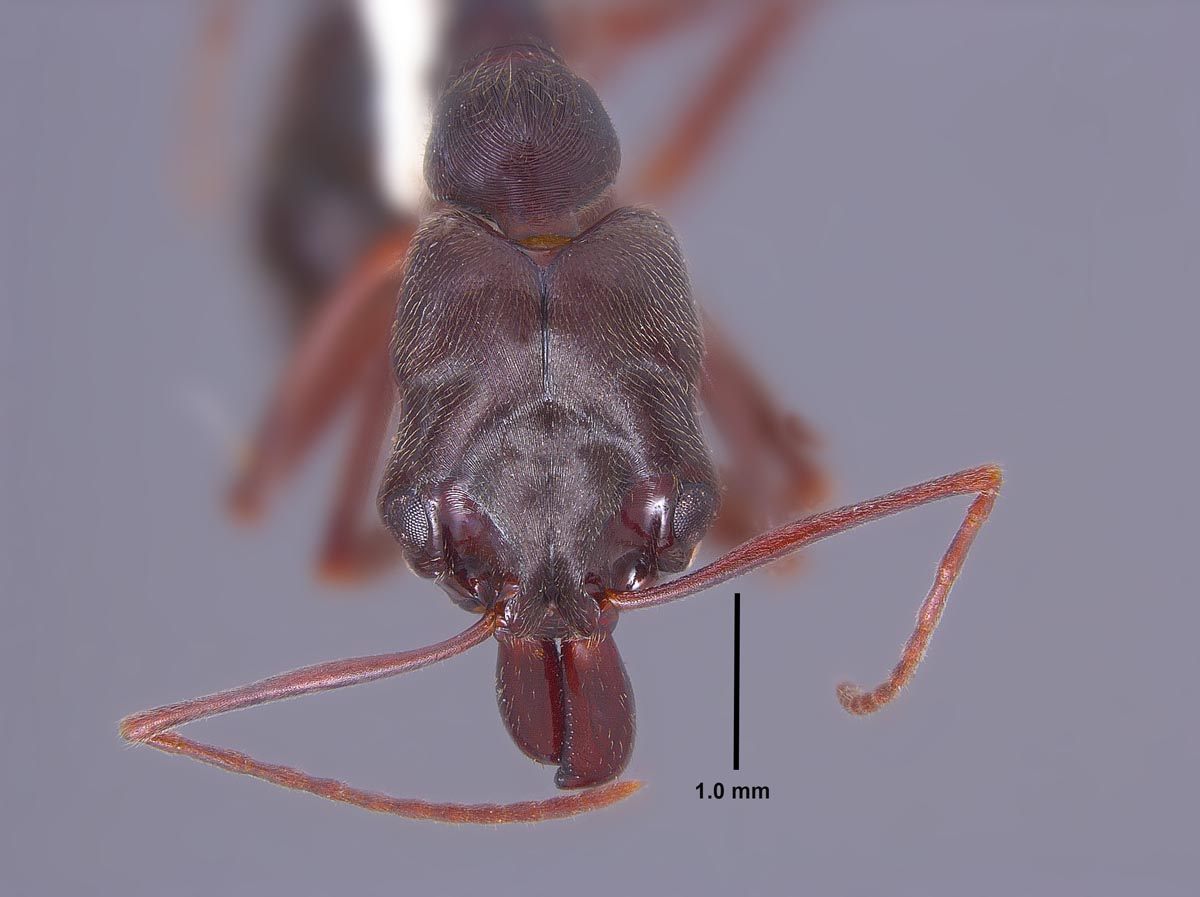
Odontomachus haematodus, full face view of worker (AL, Baldwin Co.) (photo by Ryan Whitehouse & Joe A. MacGown) |
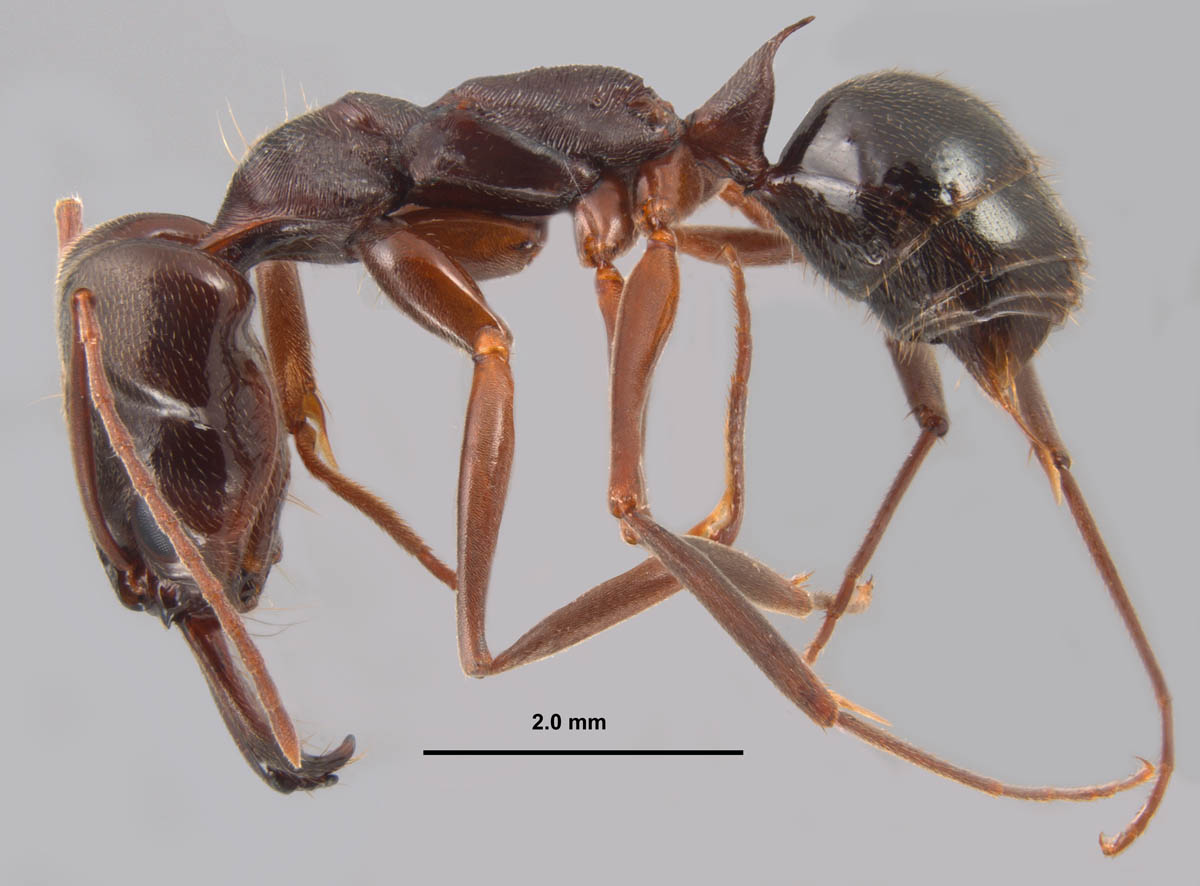
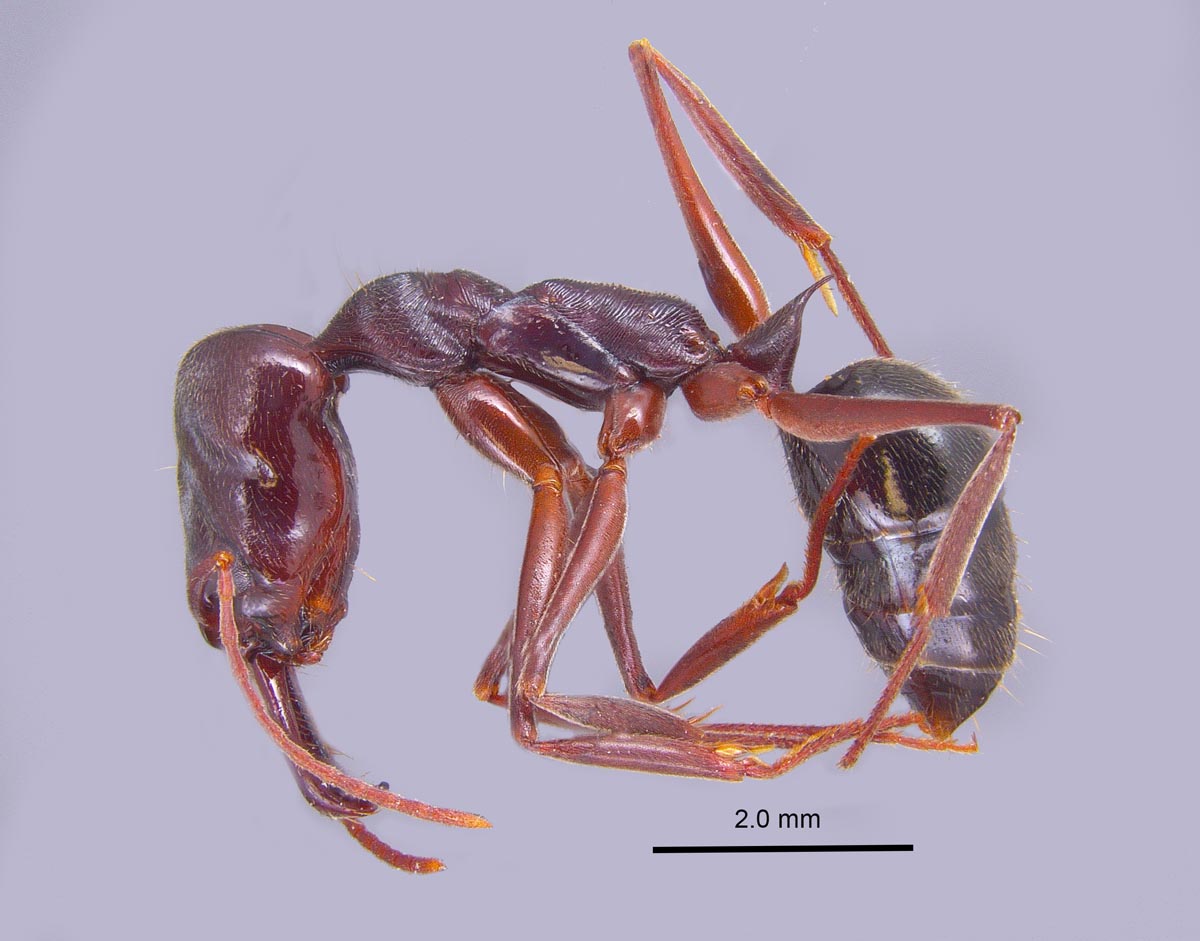
Odontomachus haematodus, lateral view of worker (AL, Baldwin Co.) (photo by Ryan Whitehouse & Joe A. MacGown) |
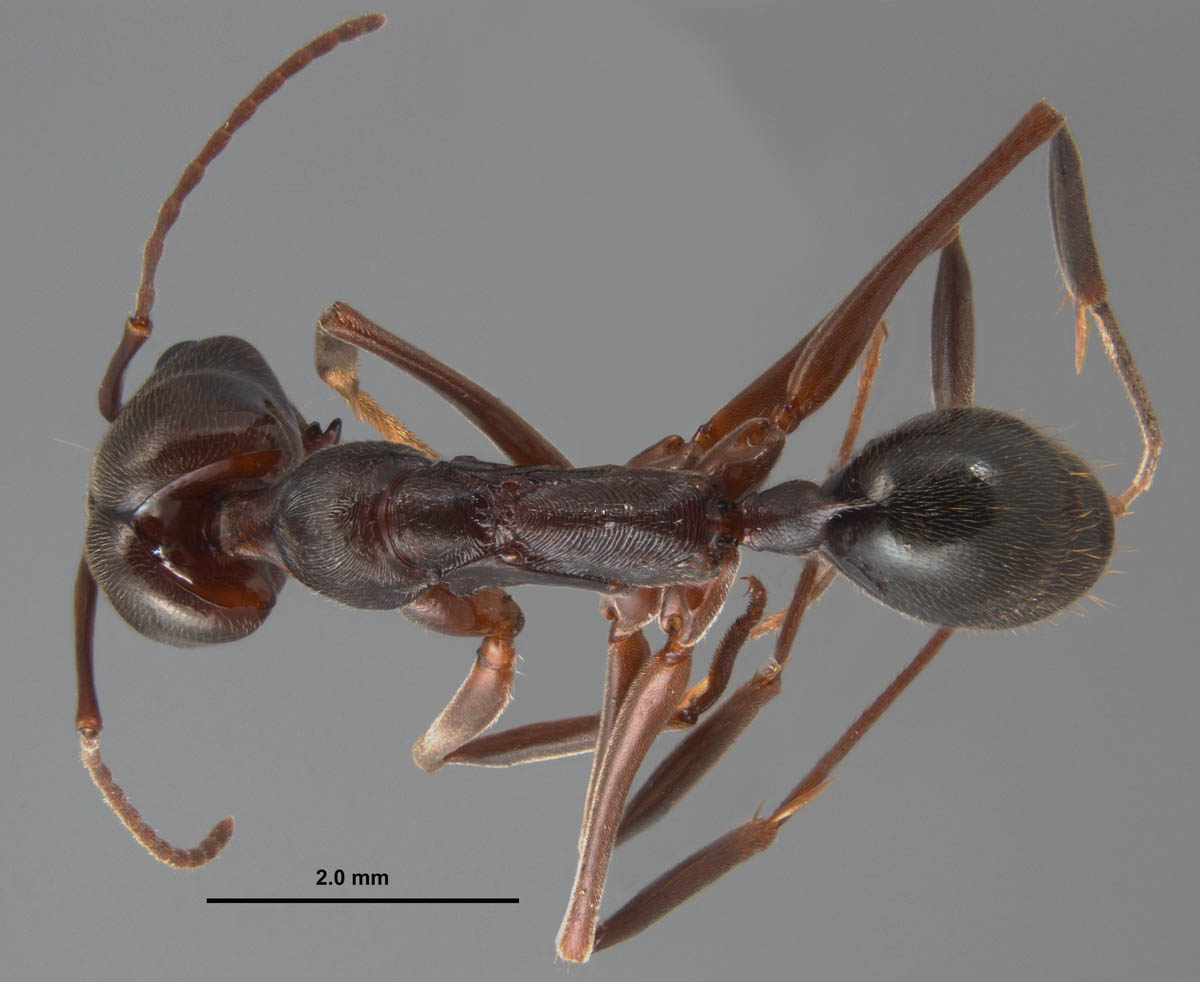
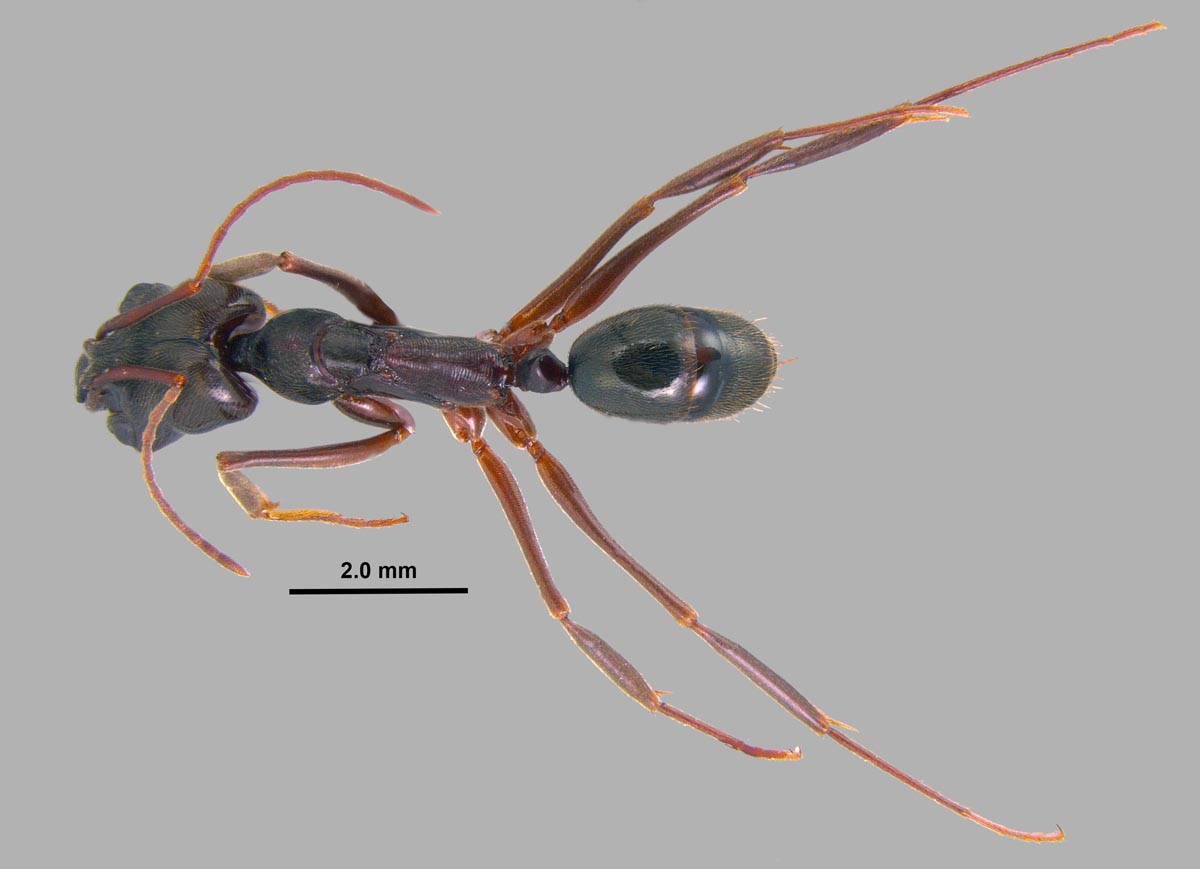
Odontomachus haematodus, dorsal view of worker (AL, Baldwin Co.) (photo by Ryan Whitehouse & Joe A. MacGown) |
 |
 |
|
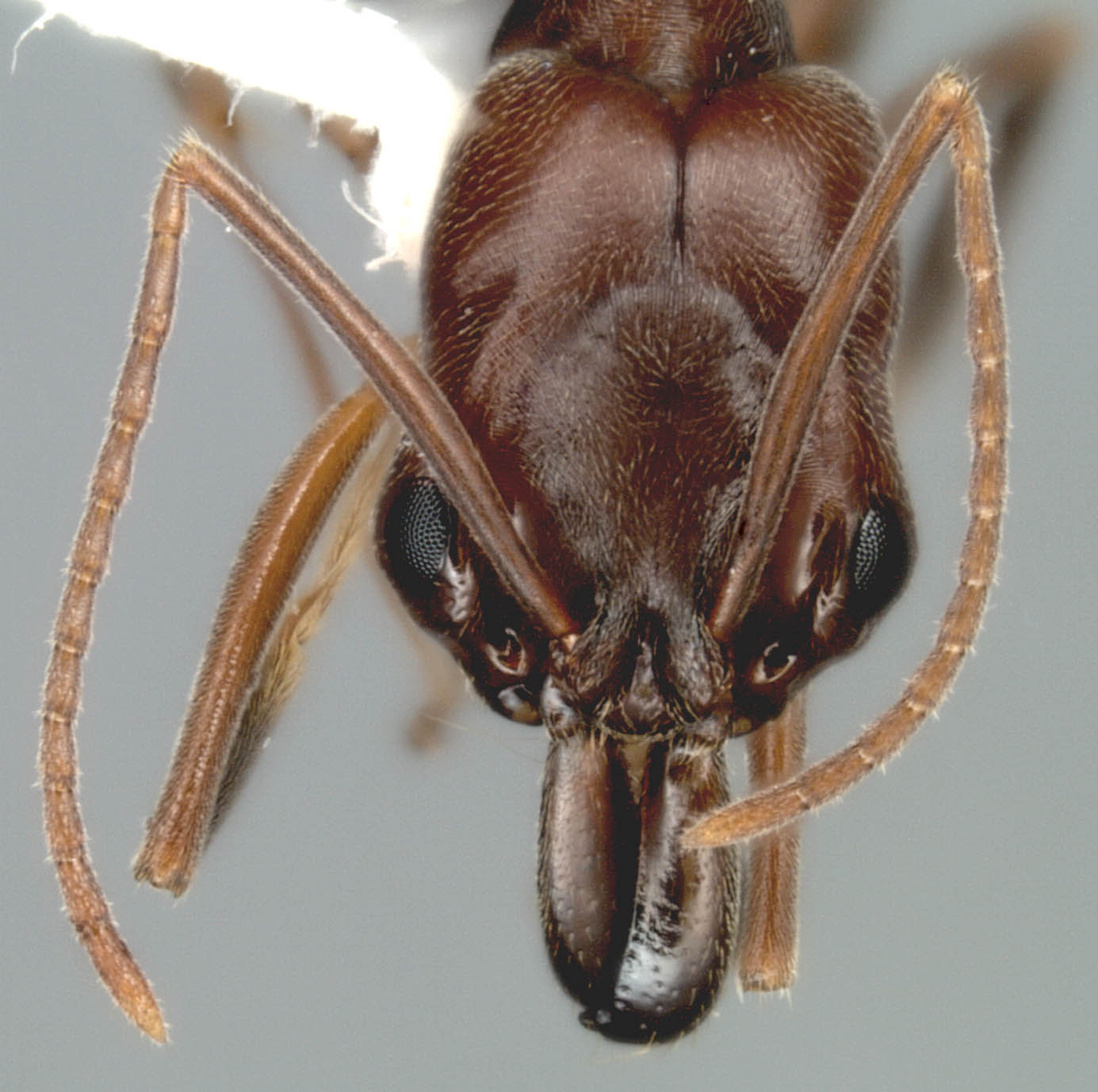
Odontomachus haematodus, full face view of worker(AL, Baldwin Co.) (photo by Joe A. MacGown) |
Odontomachus haematodus, lateral view of worker (AL, Baldwin Co. (photo by Joe A. MacGown) |
|
|
 |
 |
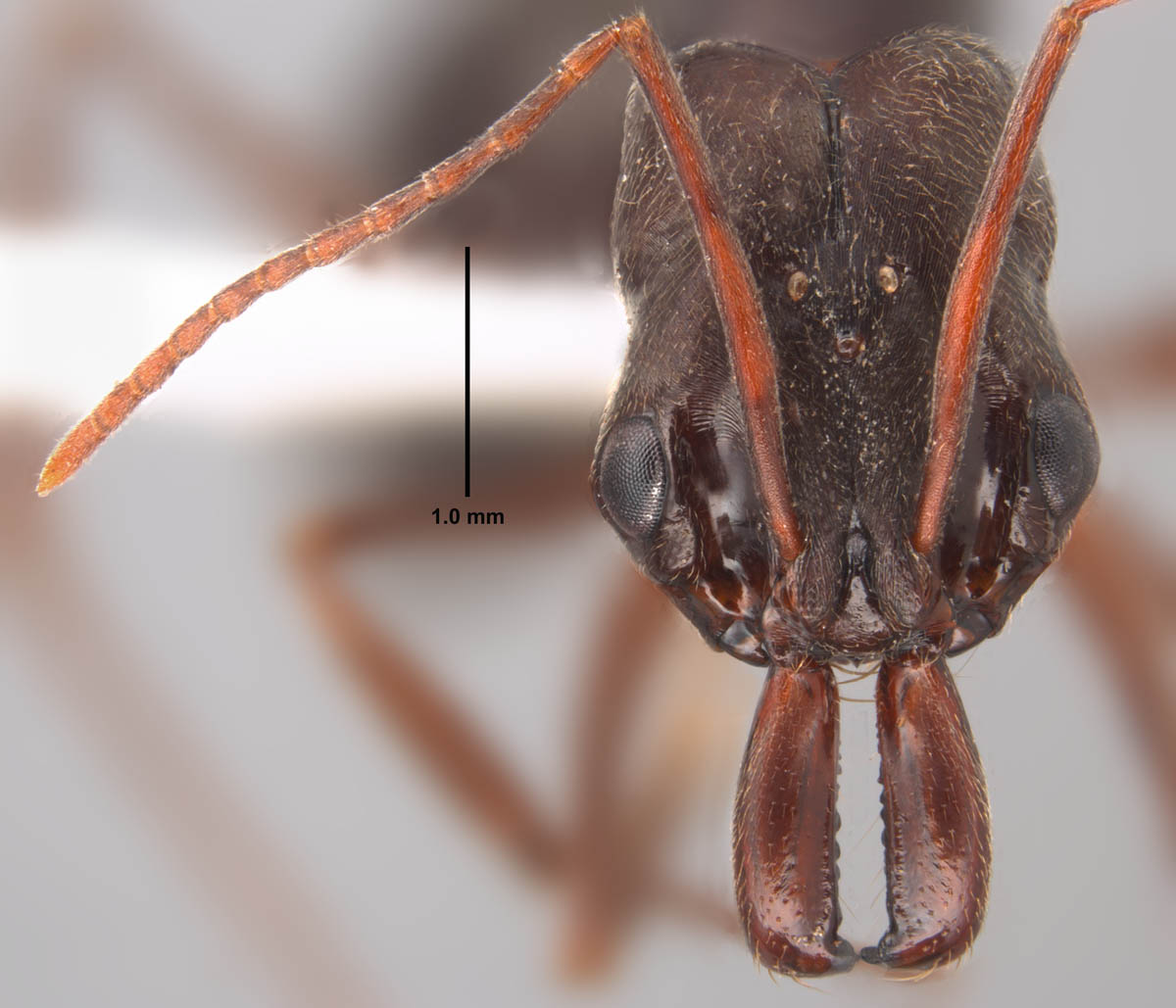
Odontomachus haematodus, full face view of a worker (AL, Baldwin Co.) (photo by Joe A. MacGown) |
Odontomachus haematodus, lateral view of a worker (AL, Baldwin Co.) (photo by Joe A. MacGown) |
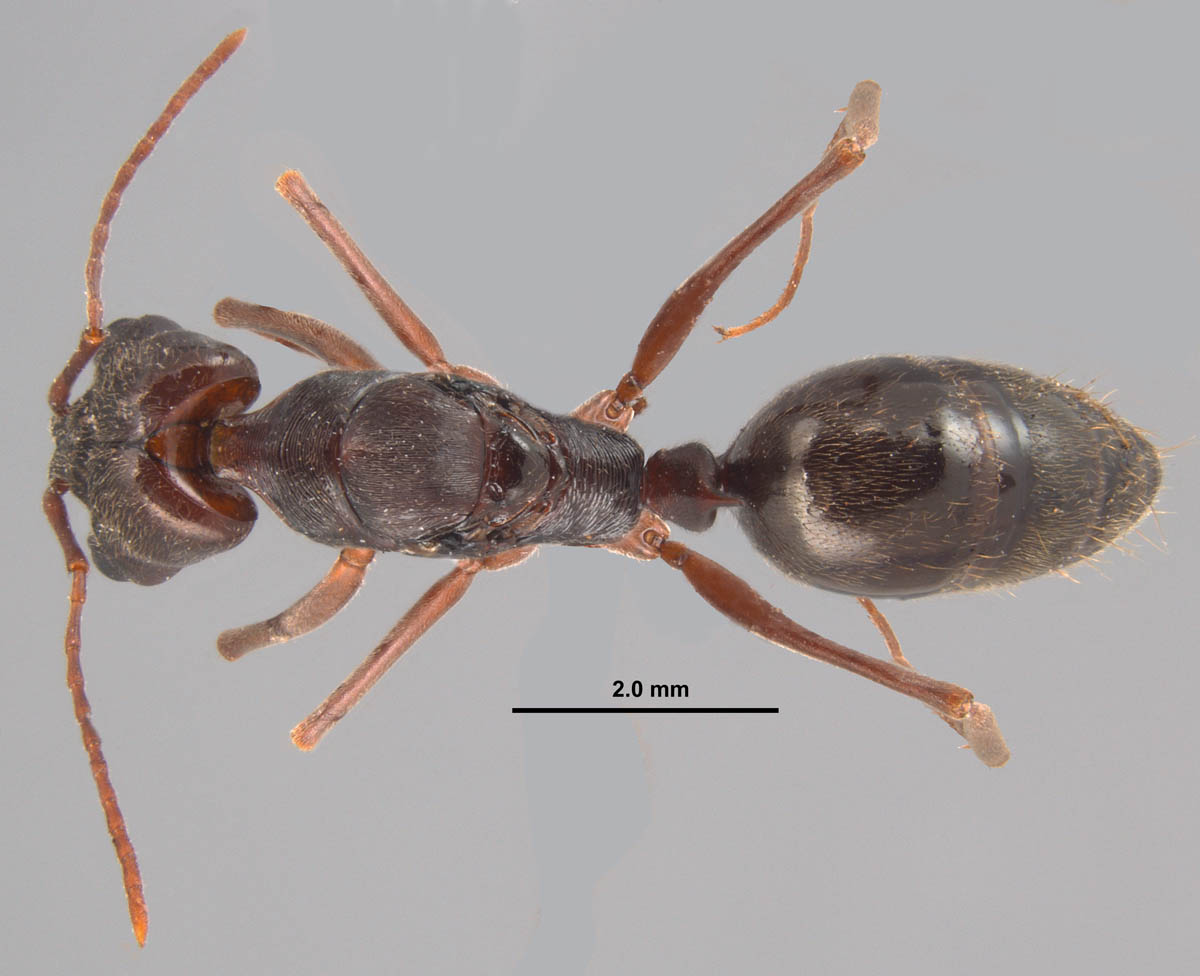
Odontomachus haematodus, dorsal view of worker (AL, Baldwin Co.) (photo by Joe A. MacGown) |
 |
 |
 |
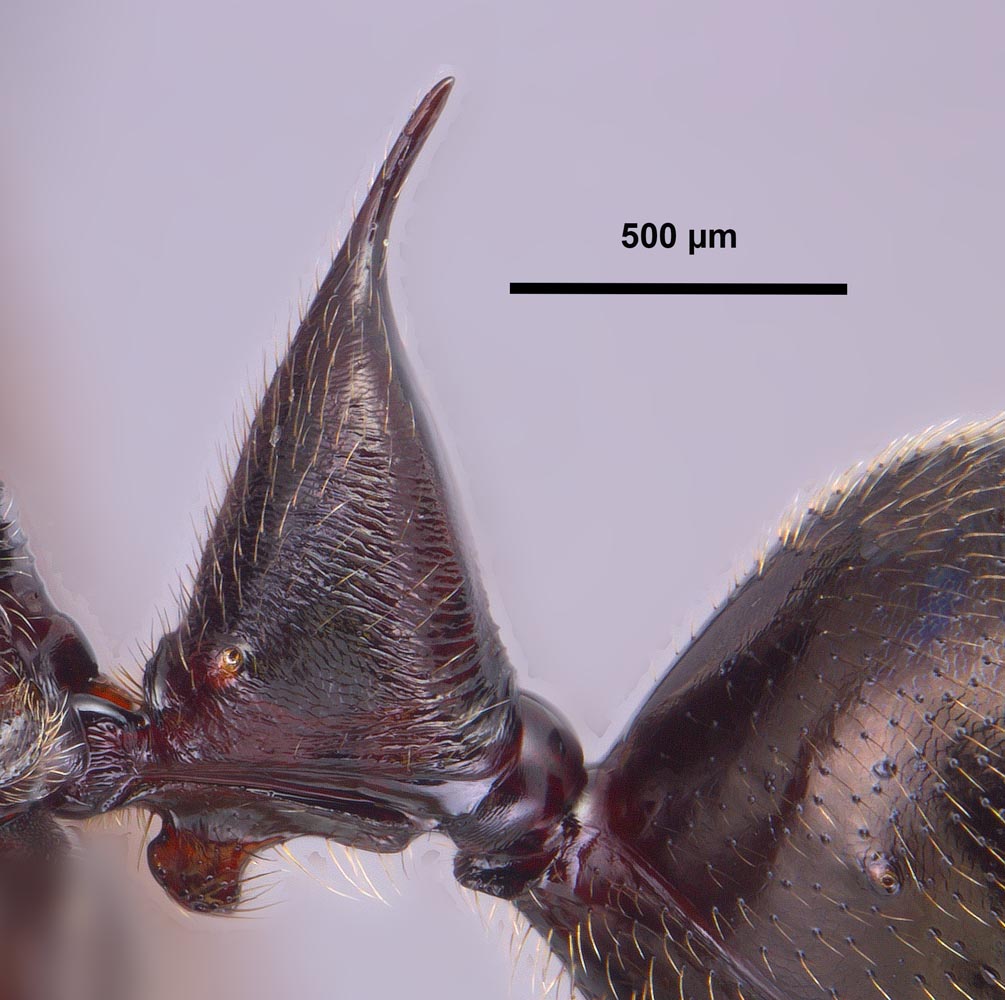
Odontomachus haematodus, worker, petiole, lateral view (AL, Baldwin Co.) (photo by Joe A. MacGown) |
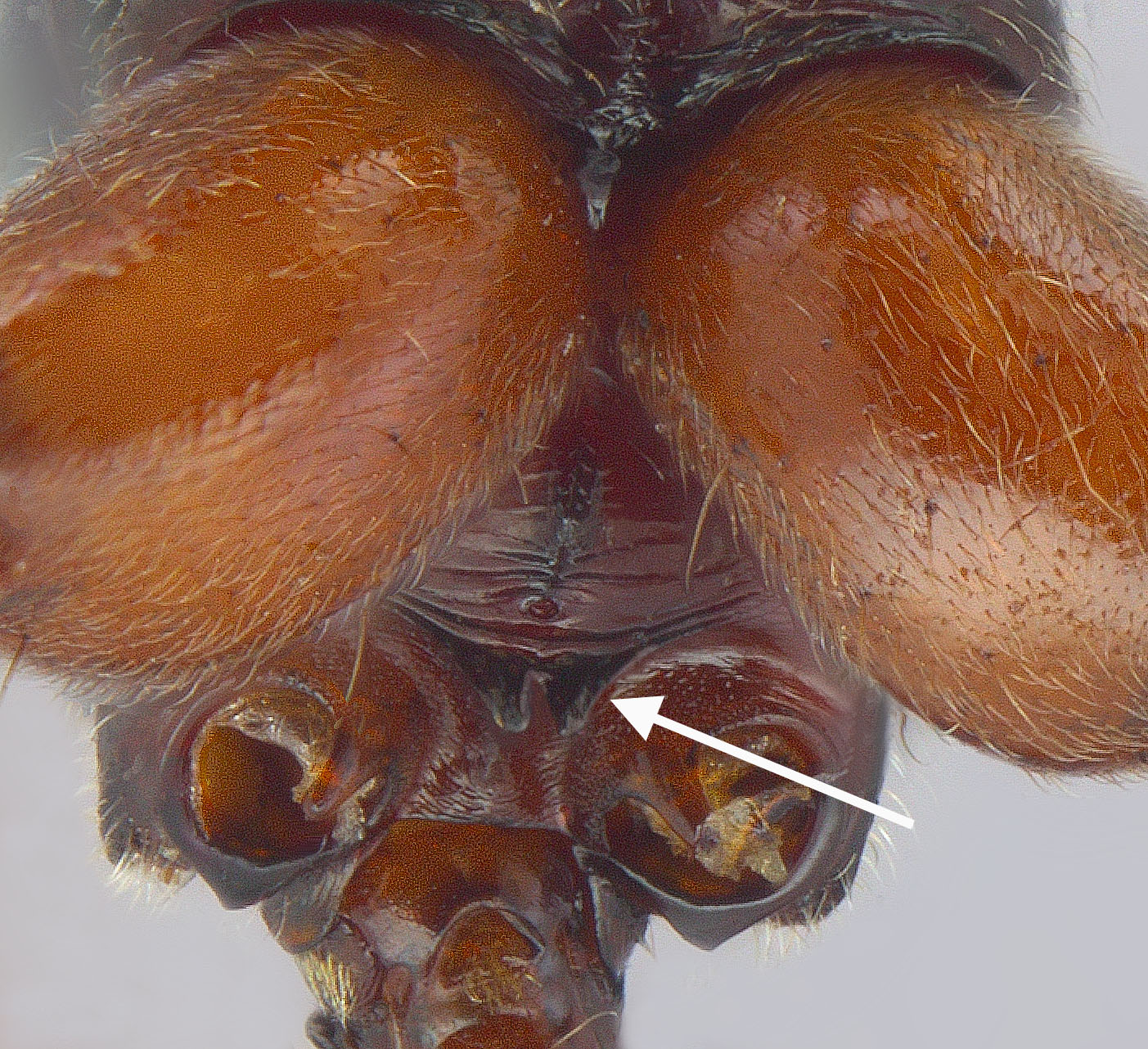
Odontomachus haematodus, ventral view of worker showing mesocoxae and with arrow pointing to metasternal spines. Metacoxae were removed. (AL, Baldwin Co.) (photo by Joe A. MacGown) |
Odontomachus haematodus, worker, gaster, dorsal view (AL, Baldwin Co.) (photo by Joe A. MacGown) |
 |
 |
 |
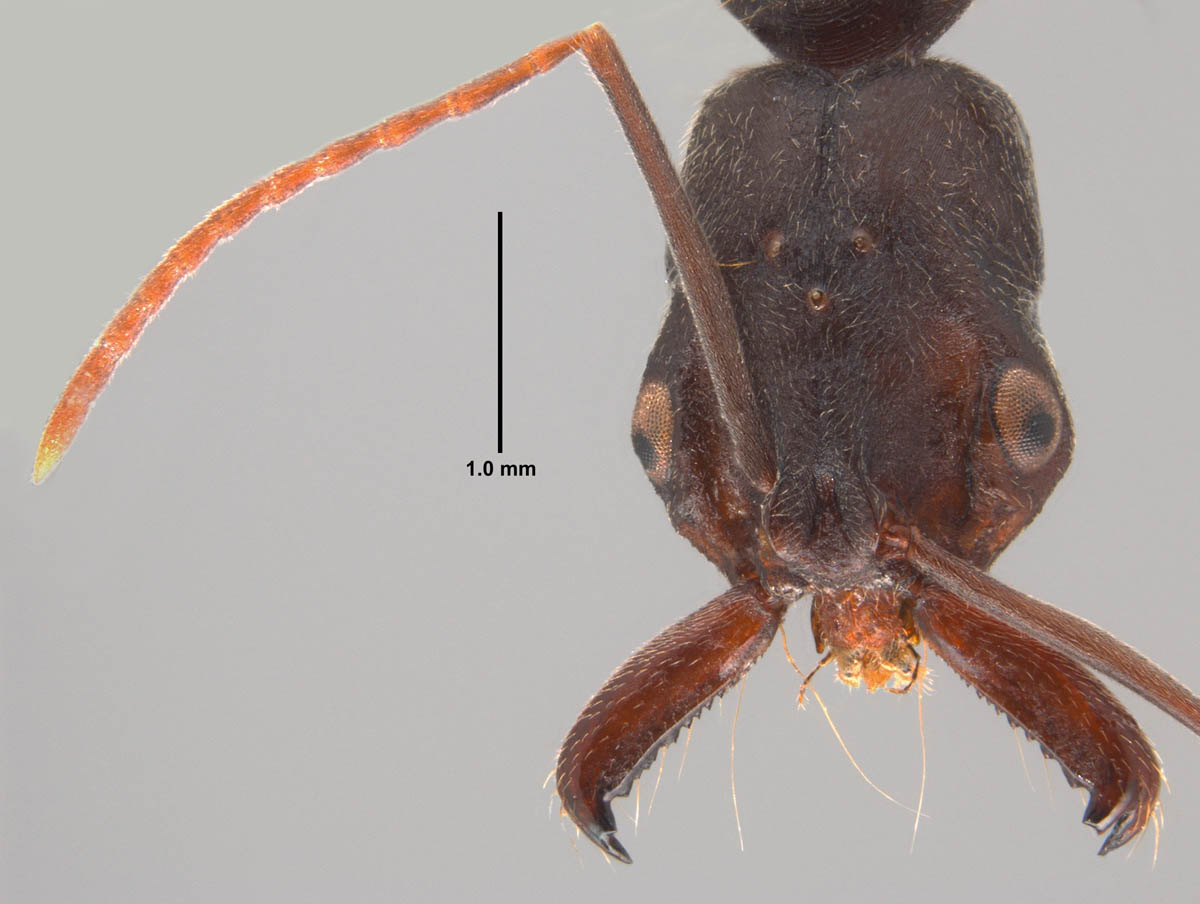
Odontomachus haematodus, full face view of a dealate queen (AL, Baldwin Co.) (photo by Ryan Whitehouse & Joe A. MacGown) |
Odontomachus haematodus, lateral view of a dealate queen (AL, Baldwin Co.) (photo by Ryan Whitehouse & Joe A. MacGown) |
Odontomachus haematodus, dorsal view of a dealate queen (AL, Baldwin Co.) (photo by Ryan Whitehouse & Joe A. MacGown) |
 |
 |
 |
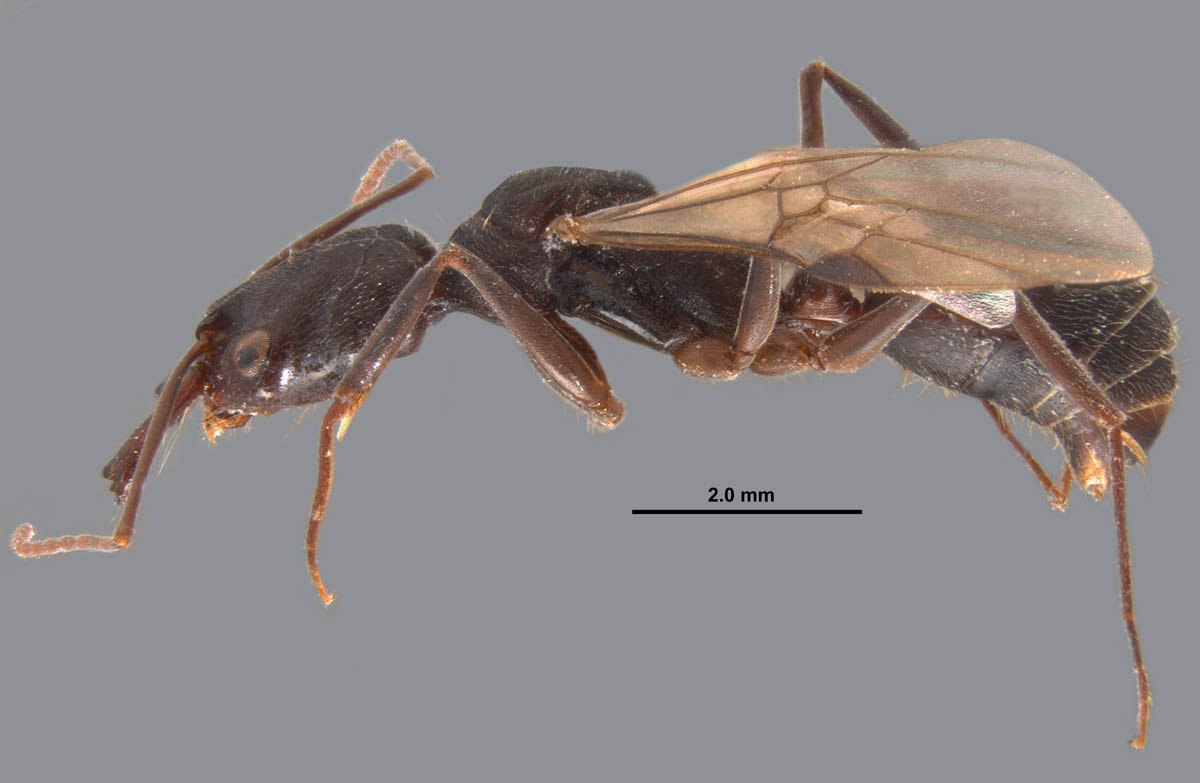
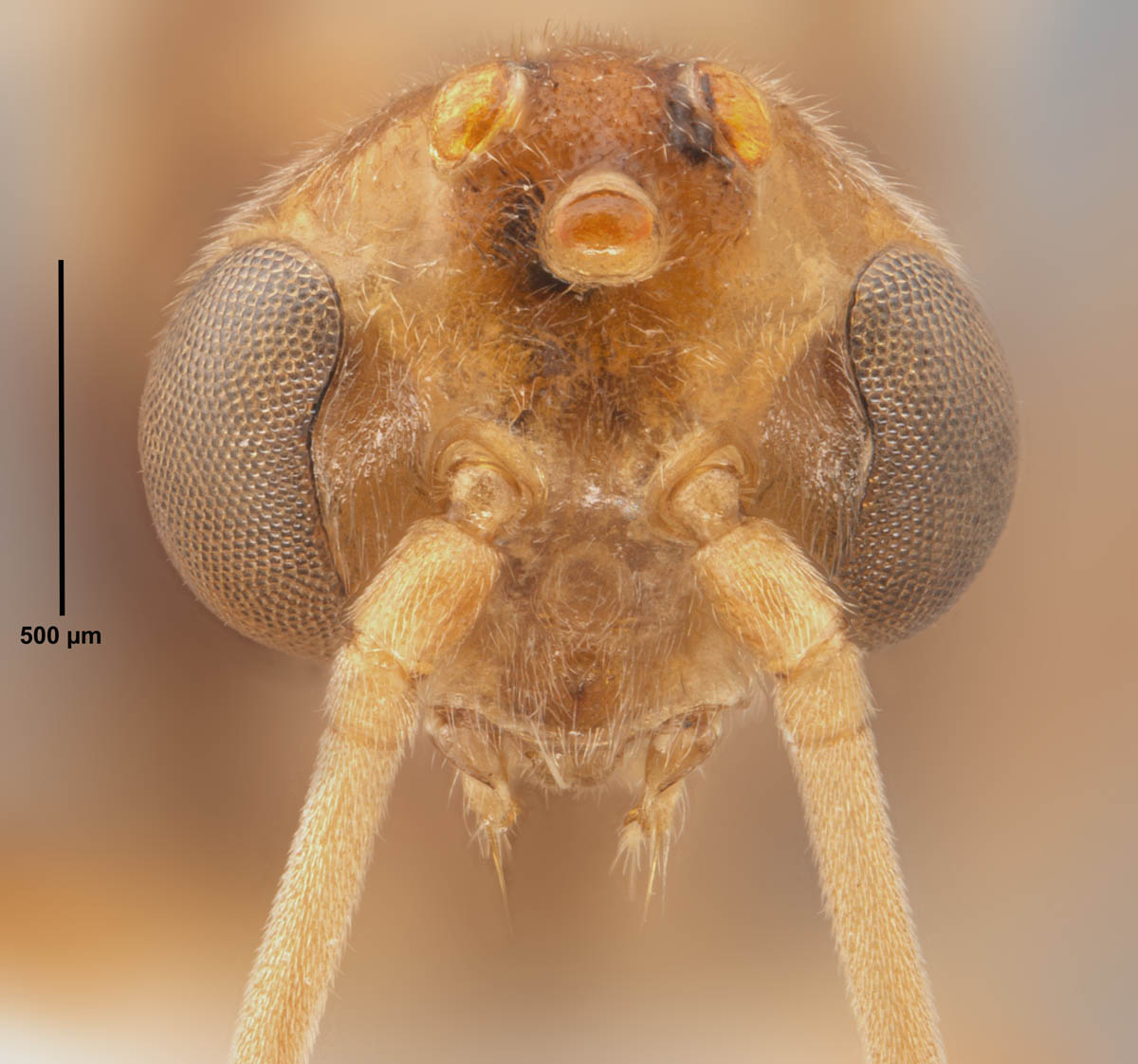
Odontomachus haematodus, full face view of an alate queen (MS, Jackson Co.) (photo by Ryan Whitehouse & Joe A. MacGown) |
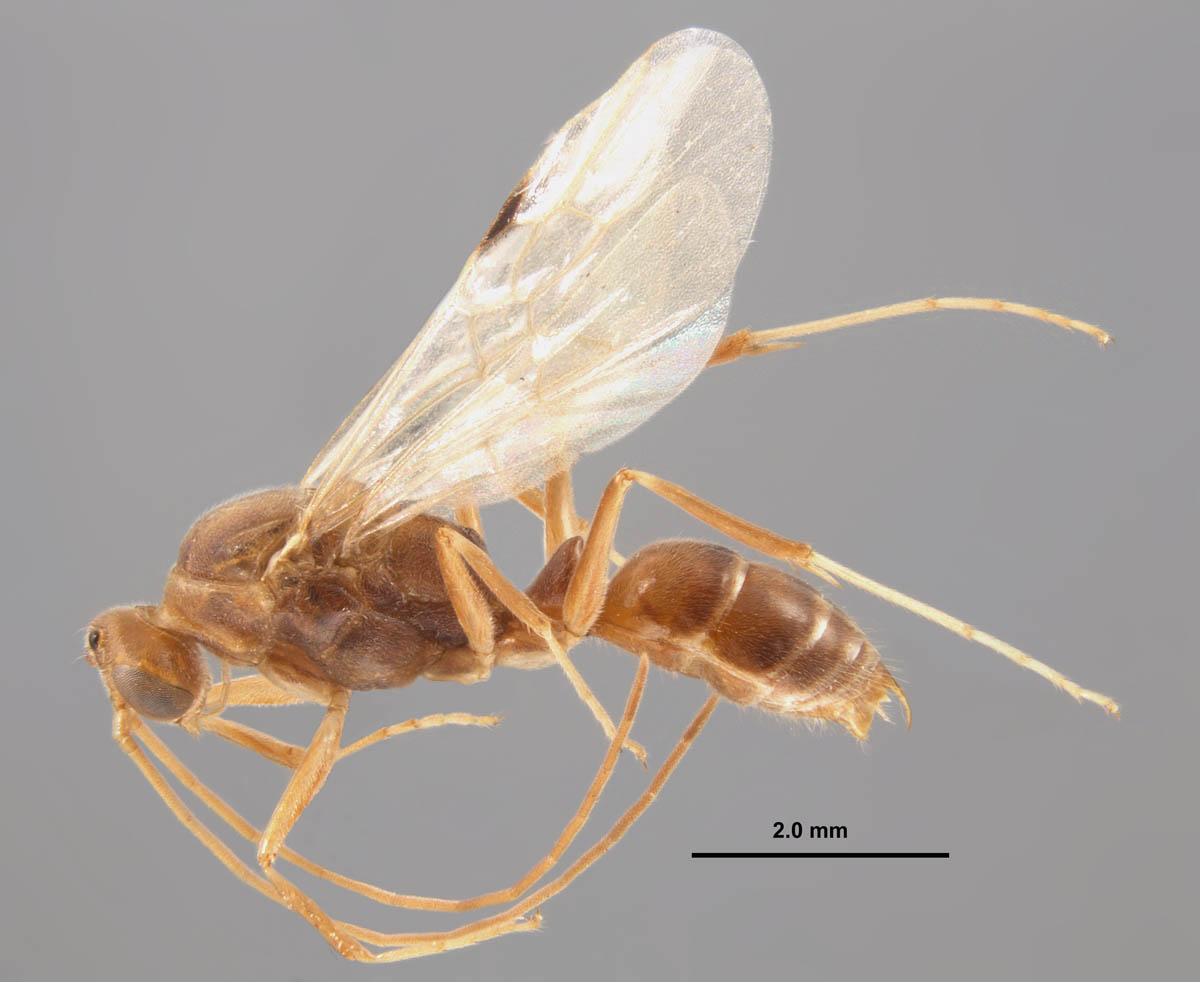
Odontomachus haematodus, lateral view of an alate queen (MS, Jackson Co.) (photo by Ryan Whitehouse & Joe A. MacGown) |
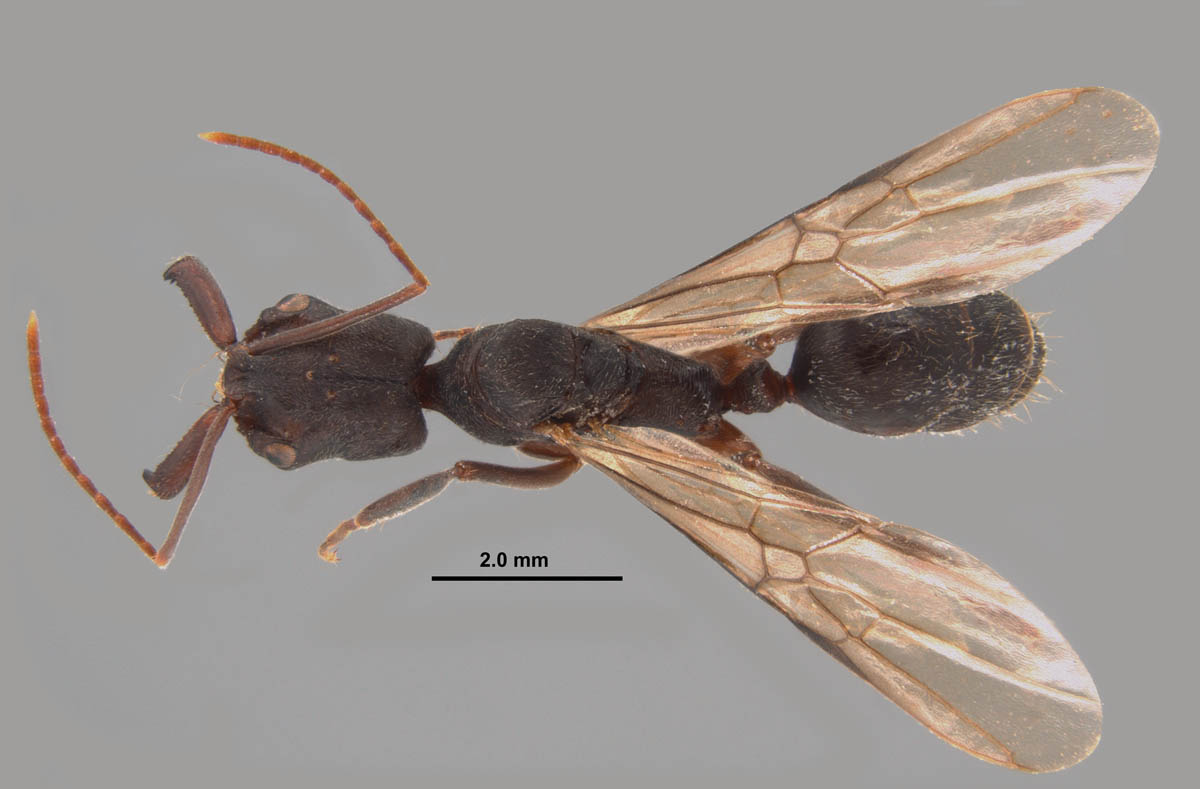
Odontomachus haematodus, dorsal view of an alate queen (MS, Jackson Co.) (photo by Ryan Whitehouse & Joe A. MacGown) |
 |
 |
 |
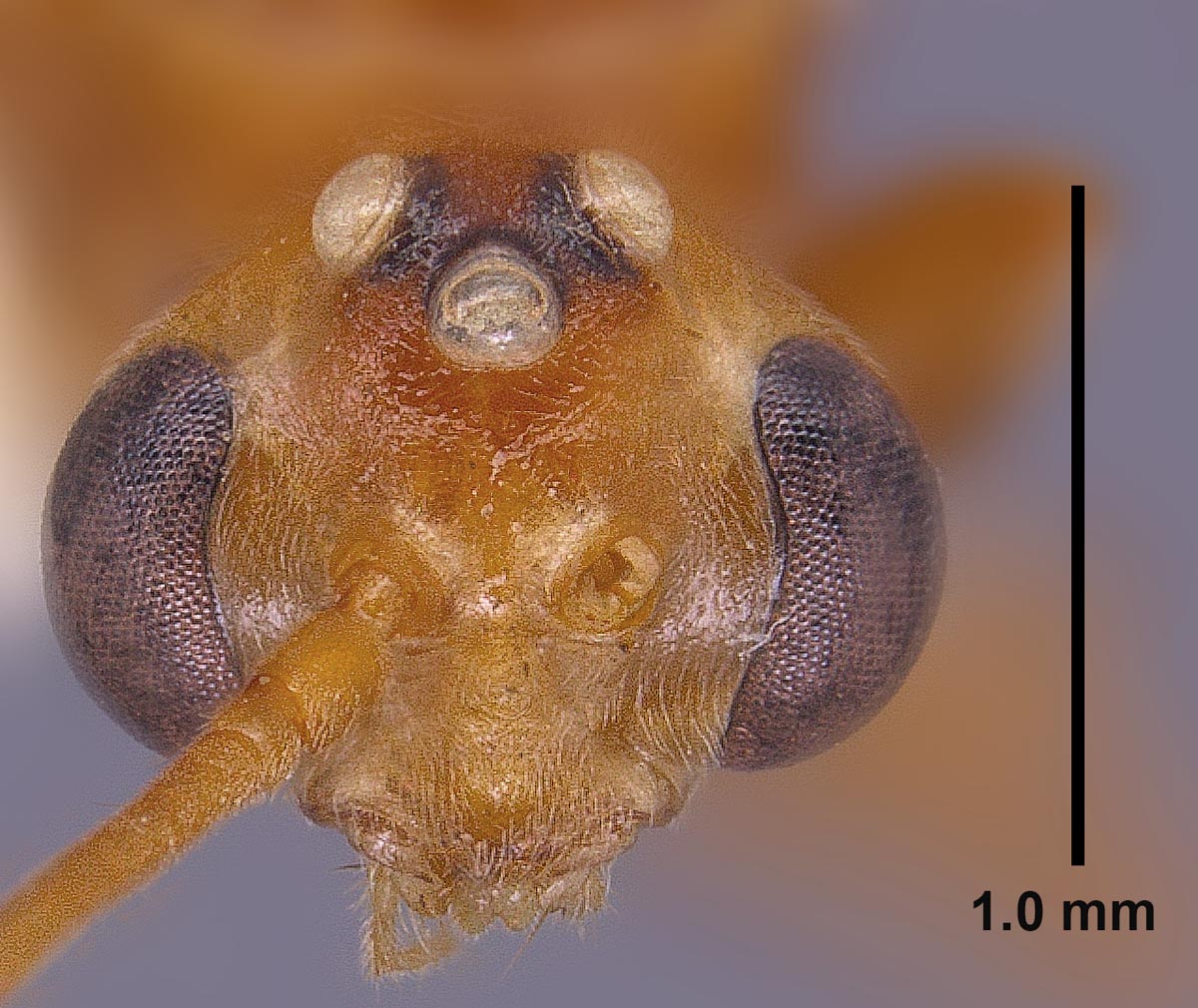
Odontomachus haematodus, full face view of a male (AL, Baldwin Co.) (photo by Ryan Whitehouse & Joe A. MacGown) |
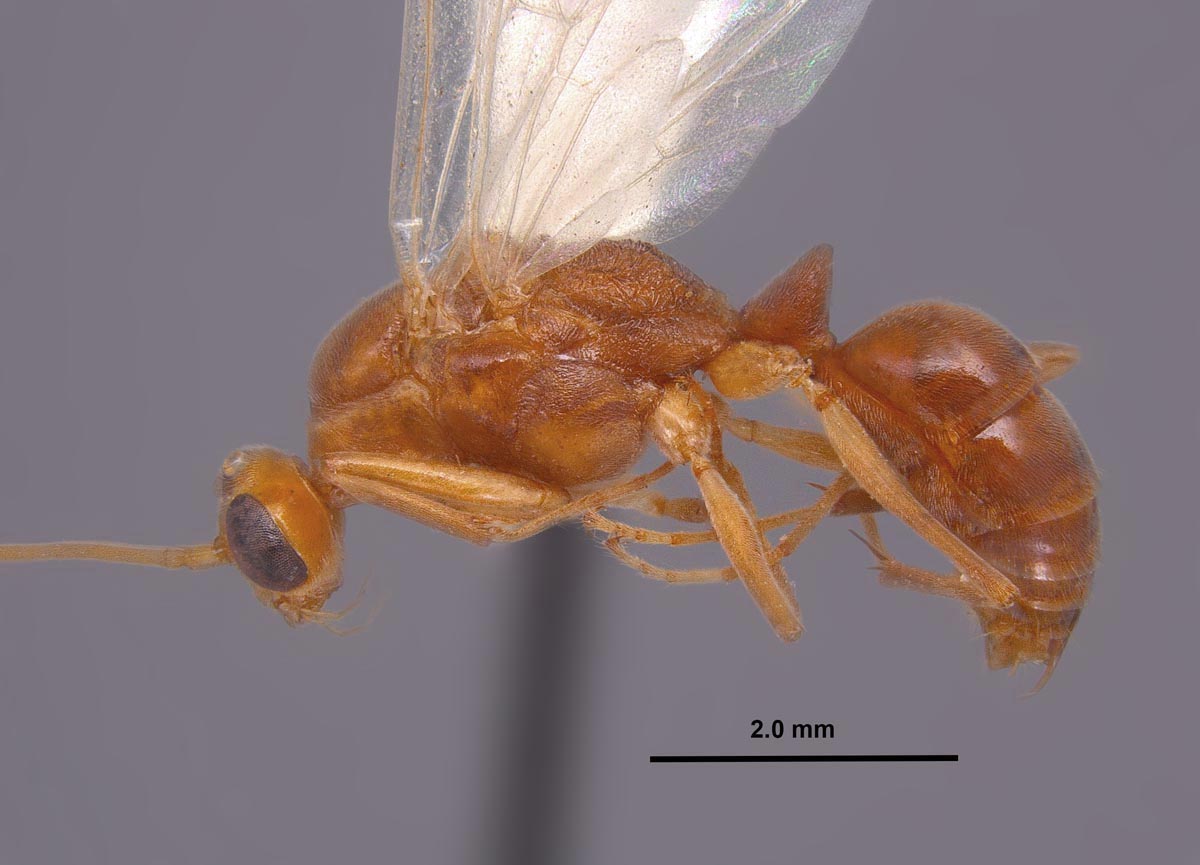
Odontomachus haematodus, side view of a male (AL, Baldwin Co.) (photo by Ryan Whitehouse & Joe A. MacGown) |
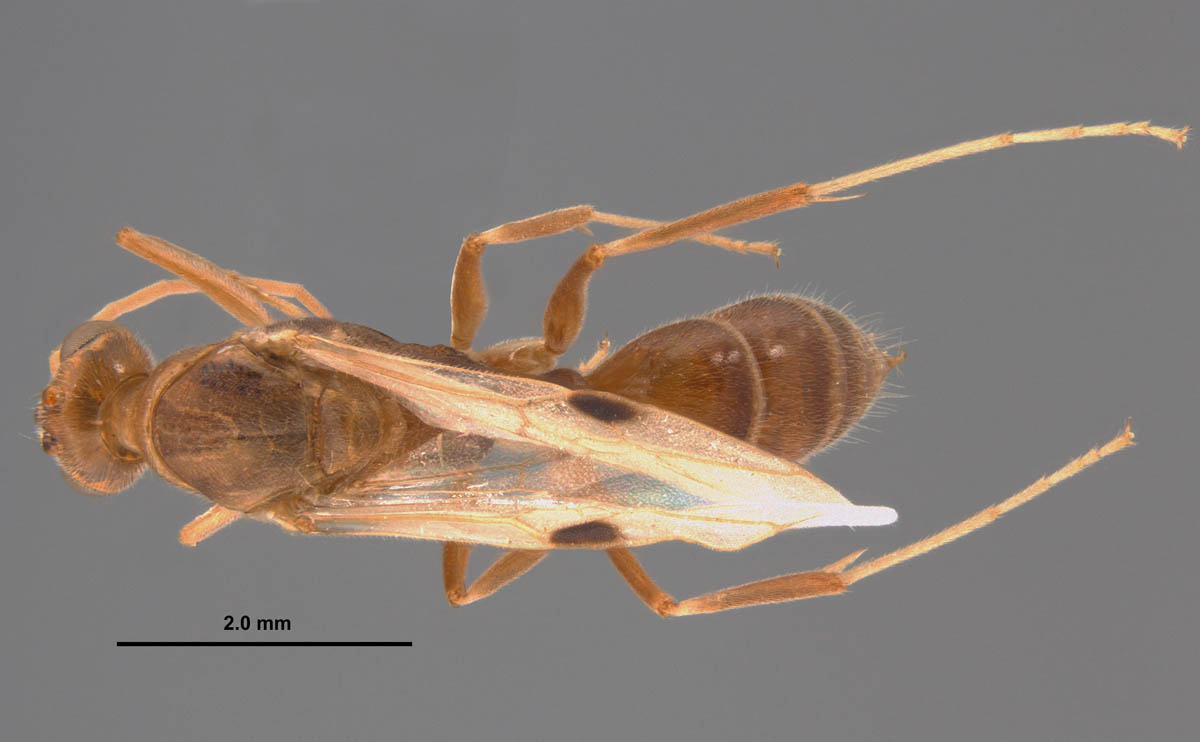
Odontomachus haematodus, dorsal view of male (AL, Baldwin Co.) (photo by Ryan Whitehouse & Joe A. MacGown) |
|
 |
 |
Odontomachus haematodus, full face view of a male
(AL, Baldwin Co.) (photo by Joe A. MacGown) |
Odontomachus haematodus, side view of a male (AL, Baldwin Co.) (photo by Joe A. MacGown) |
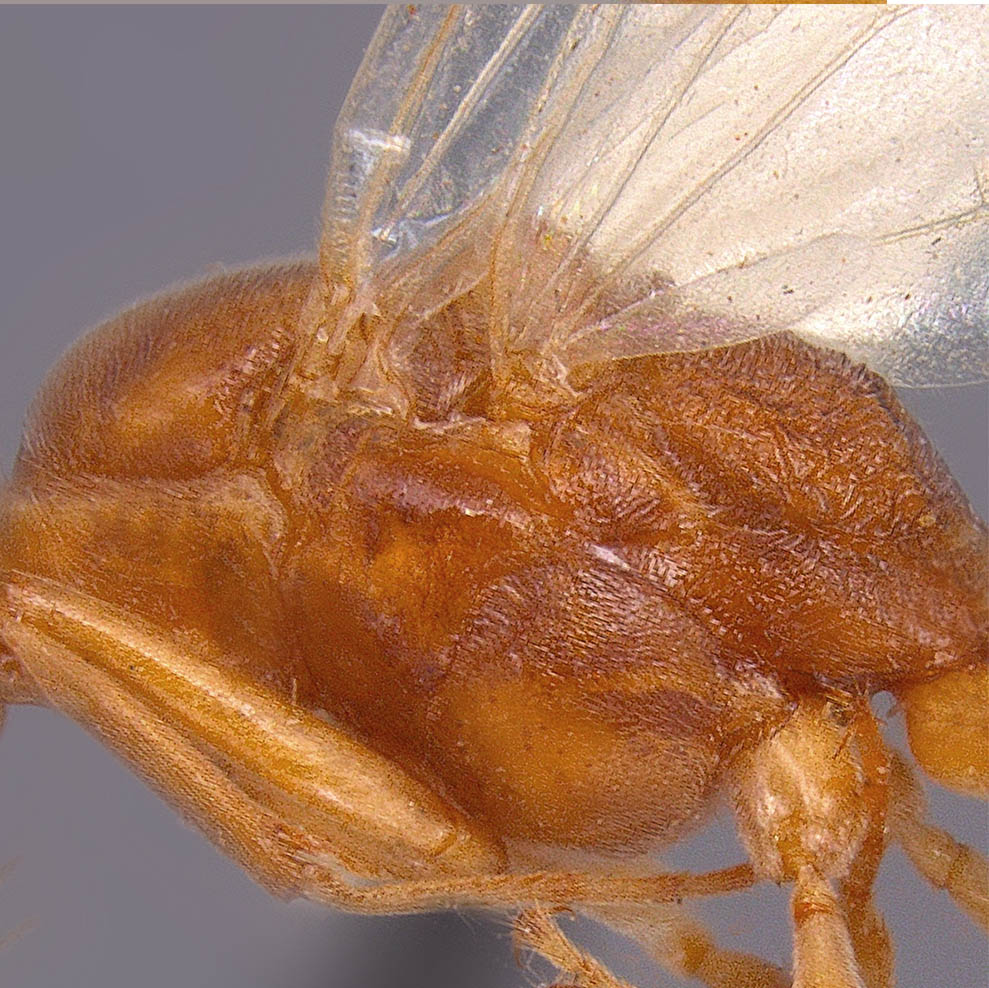
Odontomachus haematodus, side view of a male (AL, Baldwin Co.) (photo by Joe A. MacGown) |
 |
 |
 |
Odontomachus haematodus, side view of a male (AL, Baldwin Co.) (photo by Joe A. MacGown) |
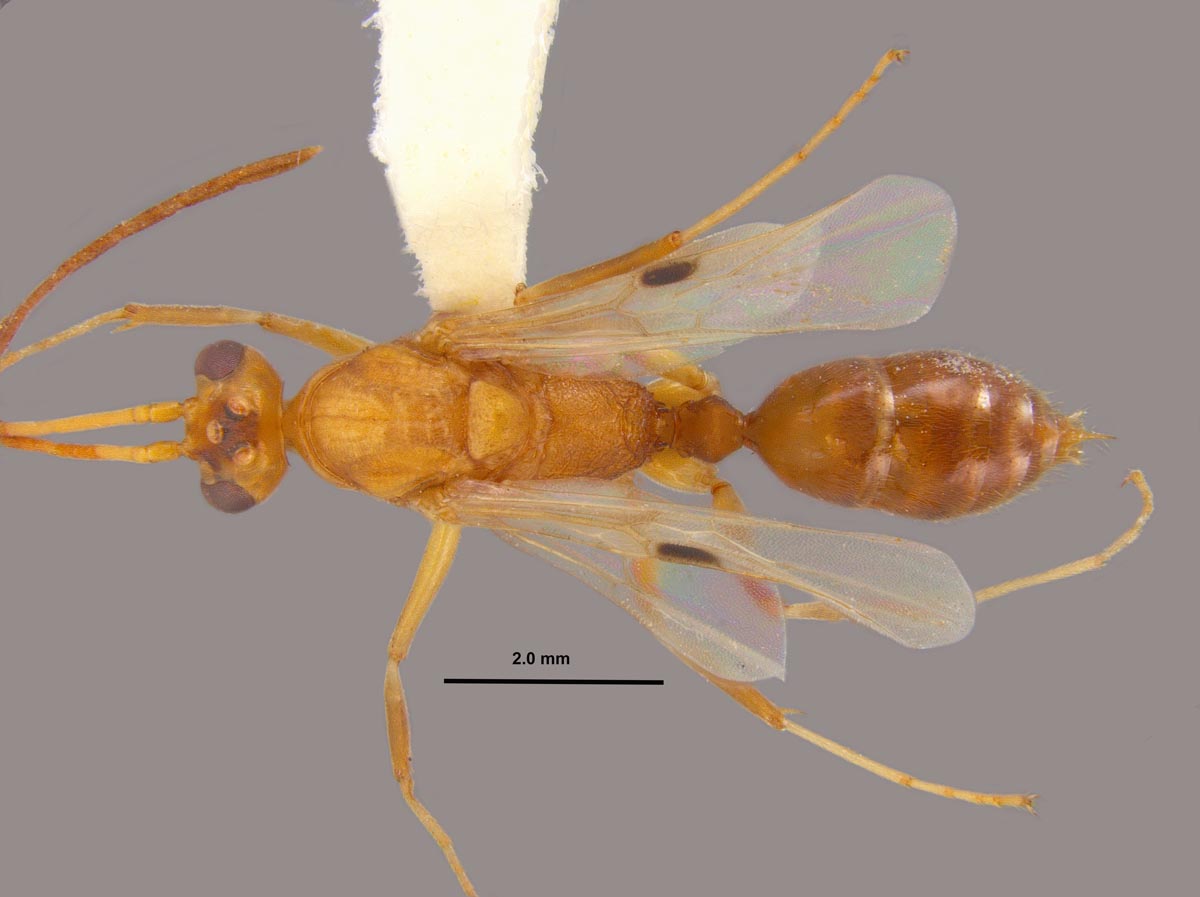
Odontomachus haematodus, dorsal view of male (AL, Baldwin Co.) (photo by Joe A. MacGown) |
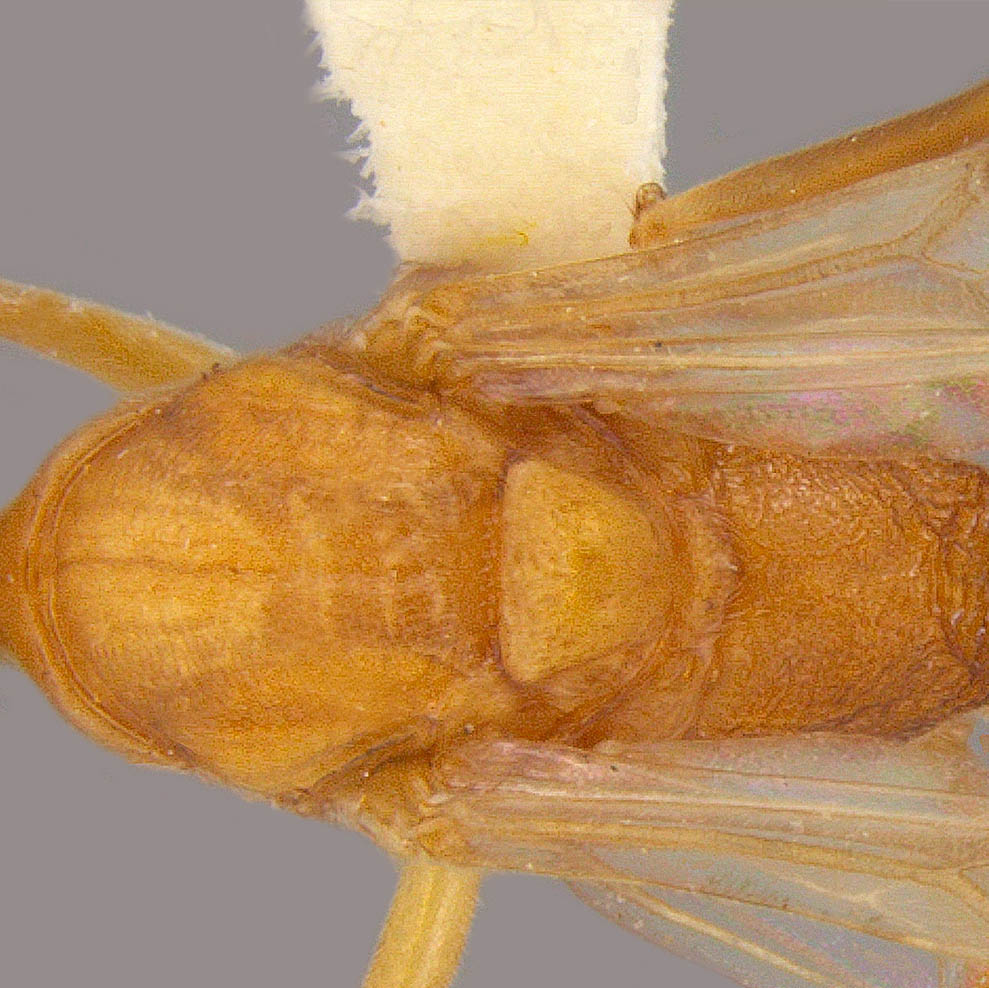
Odontomachus haematodus,male, dorsal view of mesosoma (AL, Baldwin Co.) (photo by Joe A. MacGown) |
 |
 |
 |
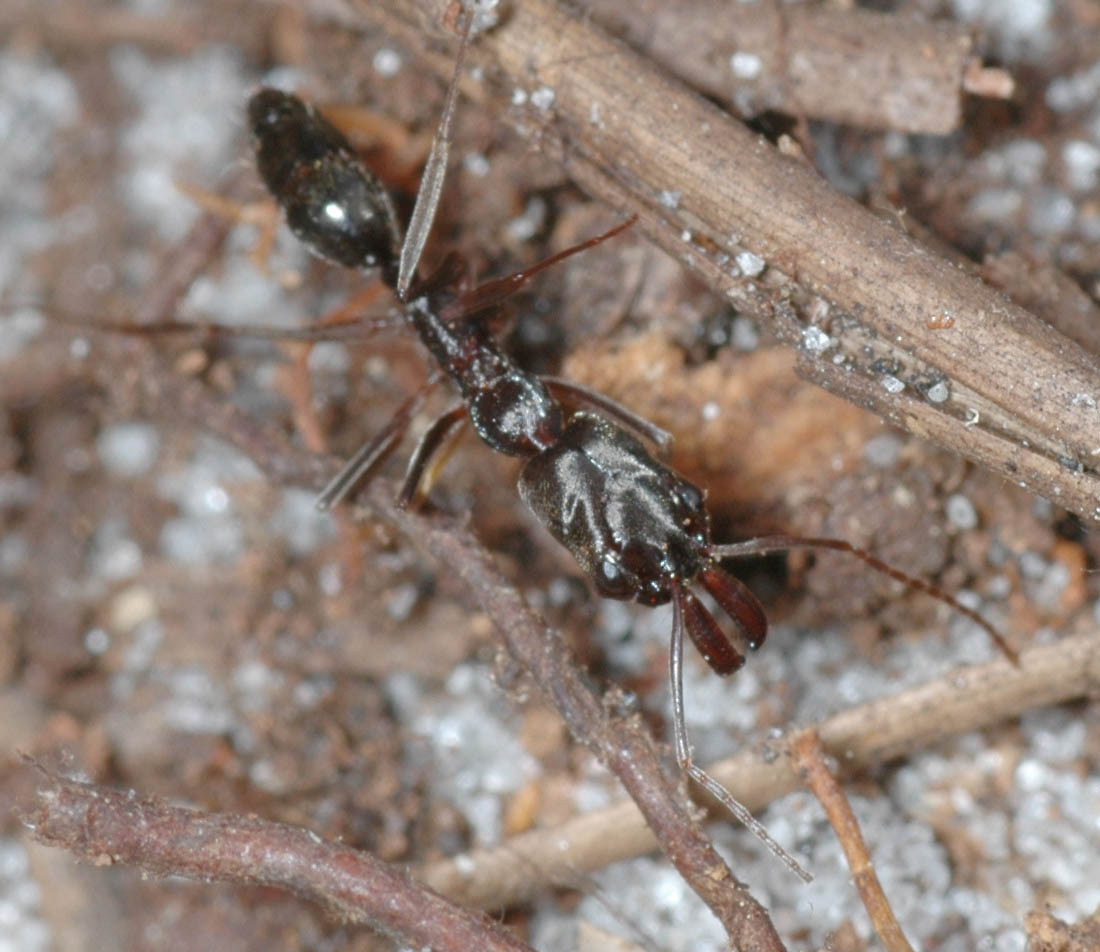
Odontomachus haematodus foraging in sand dune habitat in Gulf Shores, AL (AL, Baldwin Co.) (photo by Joe A. MacGown) |
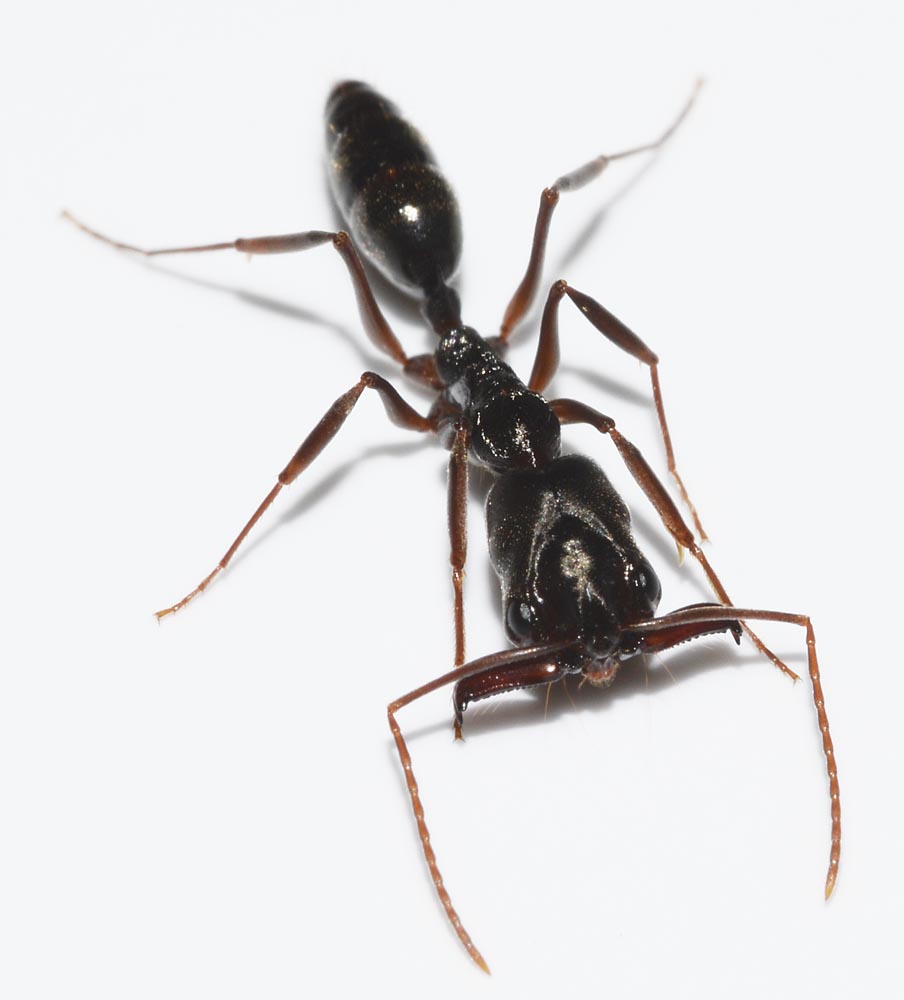
Odontomachus haematodus, worker, collected at Weeks Bay NEER, Baldwin Co., AL( AL, Baldwin Co.) (photo by Joe A. MacGown) |
Odontomachus haematodus foraging in sand dune habitat in Gulf Shores, AL (AL, Baldwin Co.) (photo by Joe A. MacGown) |
Introduction Odontomachus haemtodus (Linnaeus) (Ponerinae), the two-spined trapjaw ant, is a large, dark colored species native to South America that has recently become established along the US gulf coast from northern Florida to southern Louisiana. Based on large populations, apparent successful competition with native species that nest in the same habitat, and its painful sting, this species shows invasive potential in the US. Taxonomic History (Bolton, 2012) Diagnosis Identification Queen: Large, slightly larger than worker (HL 2.48–2.55 mm, HW 2.14–2.00 mm, SL 2.35–2.36 mm, EL 0.52–0.55 mm, ML 1.56–1.58 mm, OL 0.12–0.13 mm, PTH 1.28–1.62 mm, PTL 0.58–0.66 mm, FWL 6.5 mm, MeSL 3.56-3.60 mm) ( MEM specimens) (n=2 except for FWL for which only one individual had wings). Large, slightly larger than worker (HL 2.48–2.55 mm, HW 2.14–2.00 mm, SL 2.35–2.36 mm, EL 0.52–0.55 mm, ML 1.56–1.58 mm, OL 0.12–0.13 mm, PTH 1.28–1.62 mm, PTL 0.58–0.66 mm, FWL 6.5 mm, MeSL 3.56-3.60 mm). Entire body dark reddish brown with gaster often darker brownish black and antennae and legs orangish brown. Head longer than wide; anterior corners strongly lobed, forming a triangular depression in middle of posterior border; head somewhat constricted near midpoint, widened anteriorly at eye placement, then narrowing to the straight anterior border of clypeus; fine, longitudinal striae covering much of the head in full-face view, striae beginning from frontal lobes and diverging toward posterior corners of head, fading at corners and sides; sides and underside of head lacking sculpture; with numerous, fine, appressed pubescence and scattered elongate, erect setae present (dorsally); eyes large, located at lower third of head at widest point; three small ocelli present; antenna 12-segmented, lacking club; scape about as long as head, lacking erect setae except apically; frontal lobes close together, expanded to cover antennal insertions; clypeus reduced, anterior border straight; mandibles elongate, thickened, with denticles along inner border and two longer blunt, inward turned, apical teeth. Mesosoma not constricted, in lateral view, somewhat convex dorsally, with numerous short erect, setae dorsally, especially on pronotum; pronotum rounded anteriorly, visible dorsally, with circular concentric striae that become longitudinal near rear margin; mesoscutum with dense, longitudinal striae; mesoscutellum shiny, lacking sculpture; propodeum broadly rounded, with deep transverse striae; mesopleuron, and basalar lobe, shiny, lacking sculpture. Metasternum with paired narrowed, elongate, spiniform processes between hind coxae. Wings with light brownish tint; forewing with closed costal, basal, subasal, two discal, two submarginal, and marginal cells; medial vein extending to wing tip; pterostigma present; hind venation with closed basal and subbasal cells. Waist single-segmented, petiolar node widest at base, gradually tapering apically to a long spine directed rearward; transverse striae completely surrounding petiole except upper dorso-posteriorly where striae are faint or lacking; subpetiolar process somewhat anvil shaped; appressed pubescence present anteriorly and laterally, but mostly absent posteriorly. Gaster mostly shiny beneath pubescence, lacking striae or other strong sculpture, but weakly shagreened (seen at high magnification); fine, appressed pubescence moderately dense, spaces between hairs usually less than 1/2 the length of a hair; scattered erect, elongate setae present; sting present. Males: Smaller than worker (HL 1.00–1.12 mm, HW 1.20–1.30 mm, SL 0.18–0.20 mm, EL 0.62–0.68 mm, EW 0.38–0.40 mm, OL 0.18–0.20 mm, OES 0.20–0.22mm, PTH 0.90–0.94 mm, PTL 0.50–0.56 mm, FWL 4.95–5.45 mm, MeSL 2.68–2.83 mm) (MEM specimens) (n=5). Body orangish brown to brown, antennae and legs lighter orange brown. Head slightly wider than long (including eyes), somewhat elliptical, shiny, with numerous appressed, short setae; eyes extremely large, eye length about 70% of the length of the head; ocelli small to average in size, the length of each ocellus slightly less to approximately the same as the distance between lateral ocellus and eye margin; in full-face view, lateral ocelli do not protrude beyond posterior border of head; antenna 13-segmented, not clubbed, lacking standing erect setae, scape short and rectangular, pedicel short and square, flagellomeres elongate and subequal to one another; mandibles reduced, lacking dentition. Mesosoma thickened, with dense, fine pubescence except on anepisternum; pronotum with faint transverse striae, especially laterally, but mostly lacking sculpture; mesoscutum with faint transversely arcuate striae anteriorly, striae becoming transverse posteriorly; mesoscutellum raised and convex, lacking sculpture; propodeum evenly rounded without obvious declivious face, with strong rugoreticulation; mesopleuron mostly lacking striae or with very faint longitudinal striae. Wings with light brownish tint; forewing with closed costal, basal, subasal, two discal, two submarginal, and marginal cells; medial vein extending to wing tip; pterostigma present; hind venation with closed basal and subbasal cells. Waist single segmented; petiole bluntly rounded apically, with rounded triangular subpetiolar process anteriorly; densely pubescent anteriorly and laterally, but reduced pubescence posteriorly. Gaster shiny beneath dense, fine, white pubescence, with a few scattered longer erect setae at sclerite margins; curved, ventrally projecting spine present at apex of last tergite. Odontomachus workers in the US can be easily recognized by their large size; elongate, snapping mandibles that arise from the middle of the posterior portion of the head, the one-segmented with a petiole that terminates in a spine, and an obvious sting. Workers of O. haematodus can be separated from other species in the Southeast by their large size, paired metasternal spines, and transverse striae on the most of the petiole (reduced or lacking posteriorly except at base). Males are yellow with small ocelli that are not raised. A similar species, Odontomachus ruginodis, is much smaller on average, striae completely covers the petiole, lacks metasternal spines, and is confined to southern Florida in the US. Males of O. ruginodis are yellowish with a dark brown propodeum and brownish gaster. Workers of other US species do not have transverse striae on the petiole. Basically, if you find a large, dark colored Odontomachus along the Gulf Coast, its probably O. haematodus. Biology and Economic Importance Pest Status Distribution Native Range: South America Nearctic: United States (AntWeb.org and MEM) US Distribution: Alabama (Baldwin, Escambia, and Mobile Cos., Florida (Escambia and Santa Rosa Cos.), Louisiana (Orleans Parish), and Mississippi (Greene and Jackson Counties) [MEM records]. Acknowledgments Literature Cited Bolton, B. 2012. Bolton World Catalog Ants. accessed on September 2016. Brown, W. L., Jr. 1976. Cladarogenys genus nov. Pilot Register of Zoology Card No. 33:1-2. Emery, C. 1899. Intorno alle larve di alcune formiche. Rendiconti delle Sessioni della Reale Accademia delle Scienze dell'Istituto di Bologna (n.s.)3:93. Latreille, P. A. 1802. Histoire naturelle des fourmis, et recueil de mémoires et d'observations sur les abeilles, les araignées, les faucheurs, et autres insectes. Paris: Impr. Crapelet (chez T. Barrois), xvi + 445 pp. Latreille, P. A. 1804. Tableau méthodique des insectes. Pp. 129-200 in: Société de Naturalistes et d'Agriculteurs 1804. Nouveau dictionnaire d'histoire naturelle. Tome 24. Paris: Déterville, 84 + 85 + 238 + 18 + 34 pp. Linnaeus, C. 1758. Systema naturae per regna tria naturae, secundum classes, ordines, genera, species, cum characteribus, differentiis, synonymis, locis. Tomus I. Editio decima, reformata. Holmiae [= Stockholm]: L. Salvii, 824 pp. MacGown, J. A.; Boudinot, B.; Deyrup, M.; Sorger, D. M. 2014. A review of the Nearctic Odontomachus (Hymenoptera: Formicidae: Ponerinae) with a treatment of the males. Zootaxa 3802(4):515-552. Olivier, A. G. 1792. Encyclopédie méthodique. Histoire naturelle. Insectes. Tome 6. (pt. 2). Paris: Panckoucke, pp. 369-704. Retzius, A. J. 1783. Caroli de Geer. Genera et species insectorum e generosissimi auctoris scriptis extraxit, digessit, Latine quoad partem reddidit, et terminologiam insectorum Linneanam addidit. Lipsiae [= Leipzig]: Cruse, 220 pp. Roger, J. 1863. Verzeichniss der Formiciden-Gattungen und Arten. Berliner Entomologische Zeitschrift 7(Beilage):1-65. Wheeler, G. C.; Wheeler, J. 1952. The ant larvae of the subfamily Ponerinae - Part II. American Midland Naturalist 48:604-672. Links |
||


MEM | Research Taxa | Introduction | Faunal Lists | Identification | How to Use the Keys | Glossary | Collecting Tips | Specimen Preparation MEM Publications | MEM Ant Publications | Ant Videos | Ant News | MEM Ant Blog | References | Acknowledgments | Links
Author-Joe MacGown: jmacgown@entomology.msstate.edu
The ant web site was uploaded on 6 March 2003 and was last updated on 7 February 2022
(specific pages may have different uploaded and updated dates)
Drawings and photographs by Joe MacGown (unless otherwise noted) and copyrighted by the Mississippi Entomological Museum
The development of this web site was supported in part by the National Institute of Food and Agriculture, United States Department of Agriculture, under Project No. MIS-012040 and the USDA-ARS Areawide Management of Imported Fire Ant Project (Richard L. Brown, Principal Investigator).