D-Frame Netting, Sieving, and SeiningAuthor: Pat Wooden Virginia Tech Insect ID Lab, Blacksburg VA 24061 Uploaded March 16, 2026 |
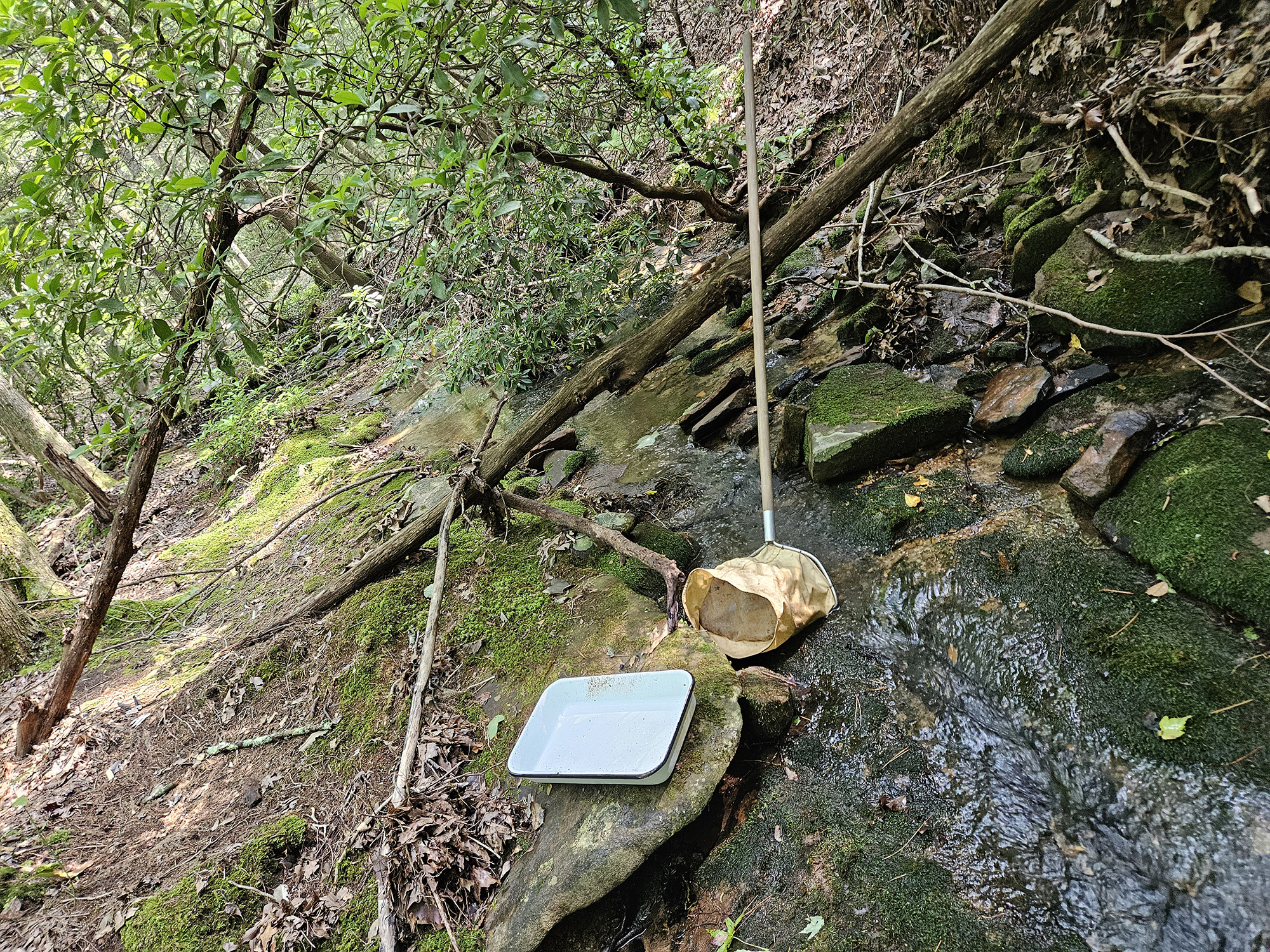
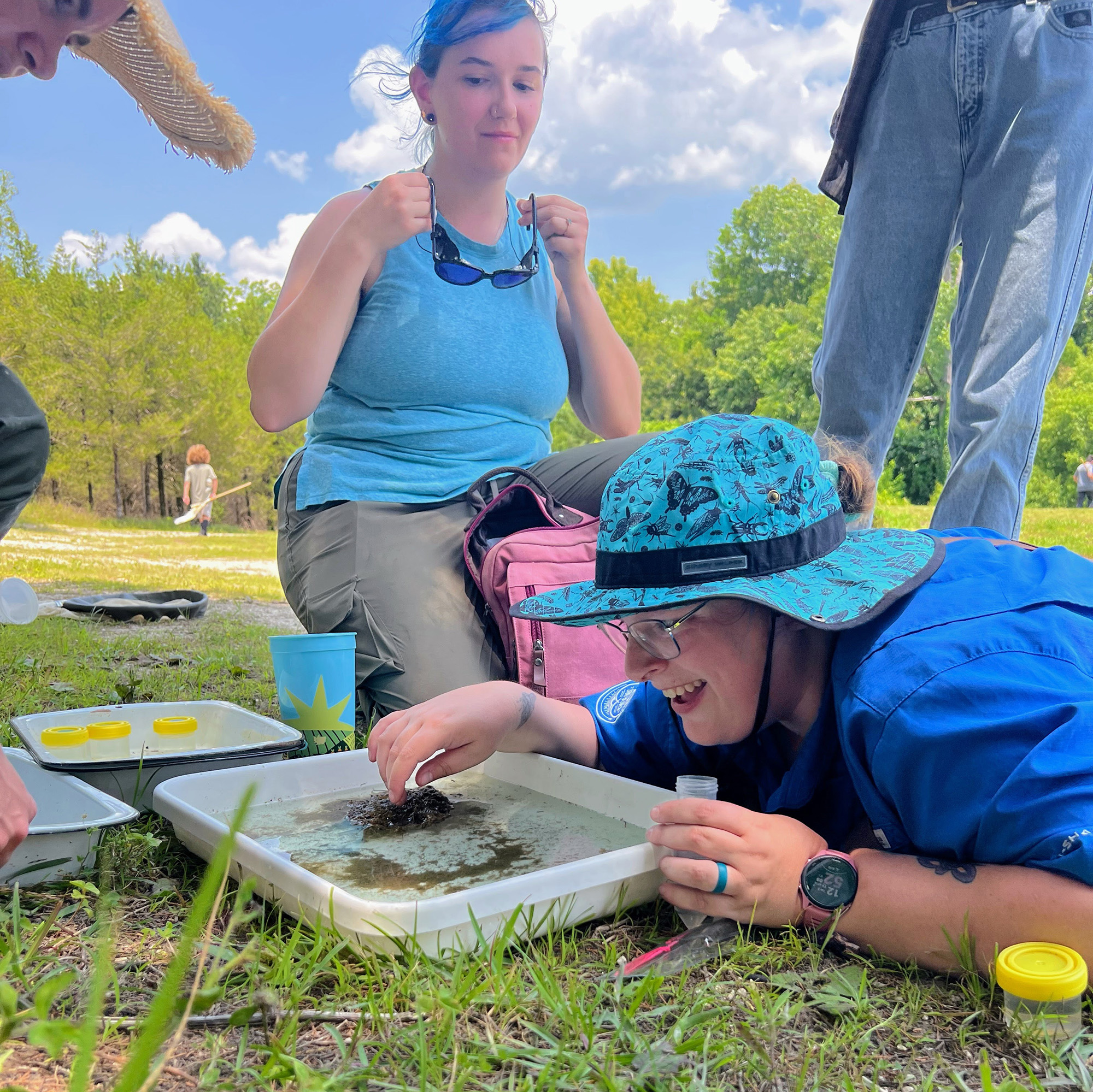
D frame nets have a flat bottom and can be weighted with rocks to ensure macroinvertebrates cannot escape underneath. Rocks should be kicked and dislodged upstream from the net so invertebrates flow into it. Materials should then be transferred into a white pan for sorting. |
|
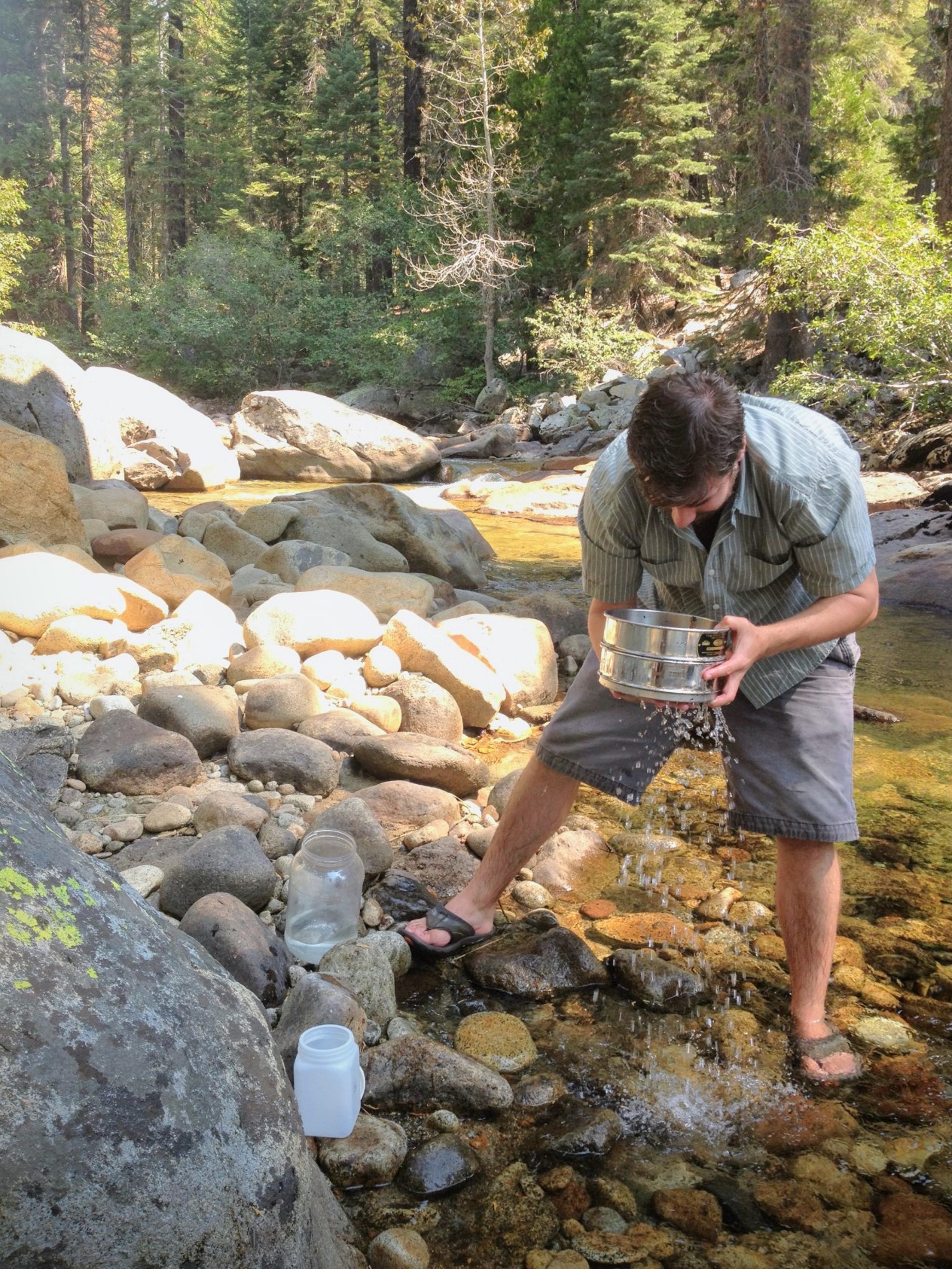
Sieves are useful for benthic samples to separate invertebrates from their substrate. Handfuls of material can be placed in the sieve and then shaken or flushed with water to move sediment through and out. For mites and plankton that are commonly missed with D-netting, the wide range of available sieve meshes is useful. |
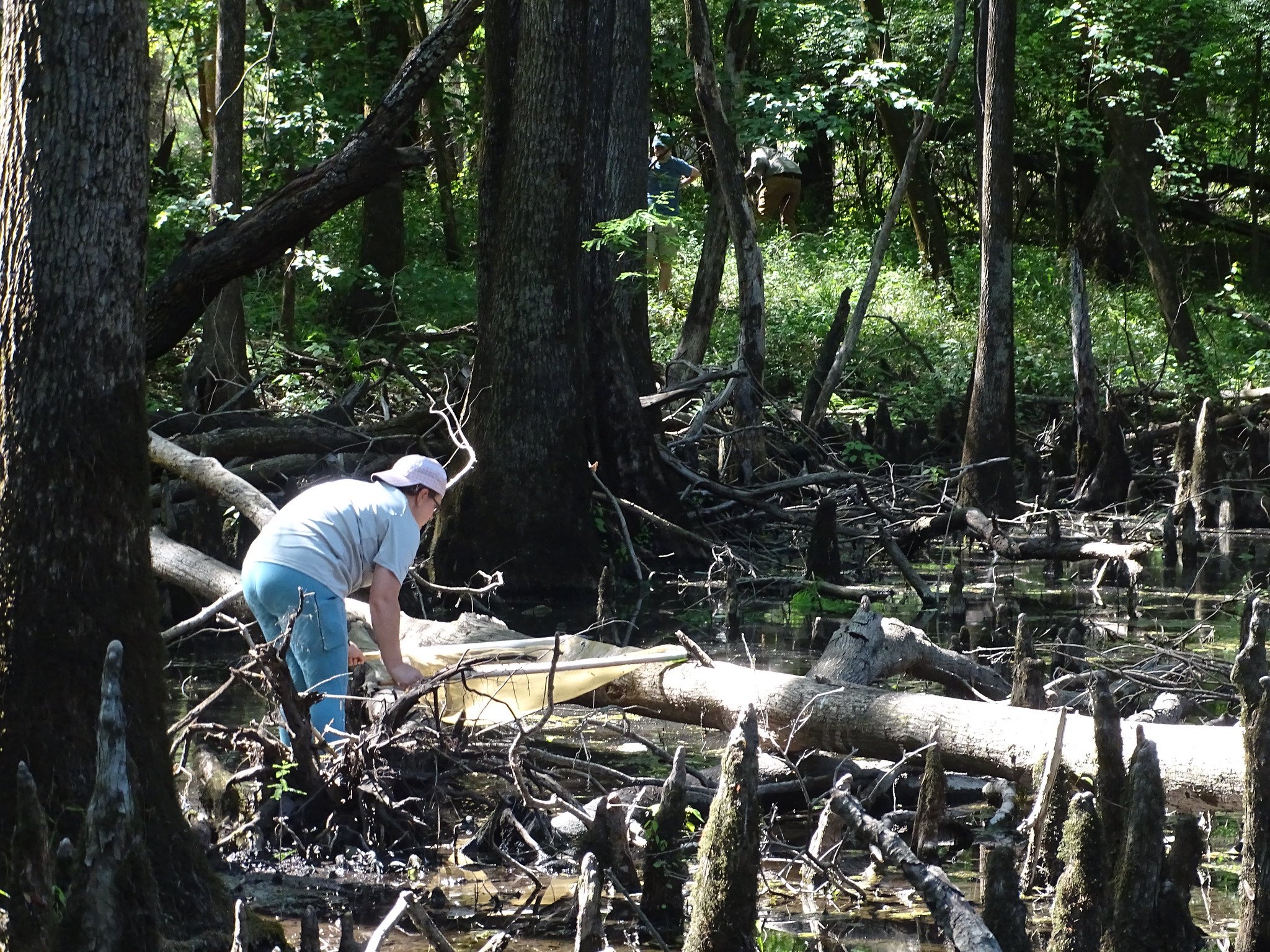
Seins, while traditionally thought of for fish sampling, can also be used for aquatic macroinvertebrates. Traditionally, these are weighted at the bottom and strung across the river channel to collect everything passing through. One man seins can also be held at an angle when traversing wetlands to pull up floating vegetation and pick macroinvertebrates. By pulling the mesh out of the water column, small individuals can be aspirated without filling the sample vial with water.
|
Traditionally, large seins are used to traverse a river or stream. The weighted bottom and net covering the water column means anything moving downstream is caught and collected. For macroinvertebrates, it’s best to deploy this method with 3 people: 2 to hold onto the ends of the sein, and one to walk upstream and kick up rocks and snags. The kicking dislodges clinging insects into the net. The sein should then be picked up swiftly and carried horizontally to shore and the insects removed. This method is easily standardized with measured flow and effort but can be unwieldy in large systems. One-man seins are smaller, typically only a couple of feet in length, and can be used with 2 people: one holding the sein and one kicking in a similar manner to the large sein. Or they can be carried and used to lift vegetation in lentic systems for easy picking. |
|
When in doubt, kick rocks. Flip rocks, sift through mats of organic material, and look at things closely. Aquatic insects are masters of staying in place and staying hidden! |
|



MEM | Info & Services | Museum Personnel | Research Taxa | MEM/ECDYSIS Database | Curatorial Resources
Screening Center |Moth Photographer's Group | Museums in Miniature | Cross Expeditions | Publications/Archives
Mississippi Habitats | Anthropological Entomology | Visitors
Copyright 2006, all rights reserved, Mississippi Entomological Museum, Mississippi State University
For comments and feedback concerning this site contact Joe MacGown at jmacgown@entomology.msstate.edu
Last updated on November 21, 2025
"The views and opinions expressed herein are strictly those of the page author or organization.
The contents of this page have not been reviewed or approved by Mississippi State University."