
Rubber Boots or WadersAuthor: Pat Wooden Virginia Tech Insect ID Lab, Blacksburg VA 24061 Uploaded March 16, 2026
|
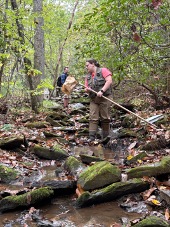
The most effective way to collect aquatic insects is to get into the water with them. What is needed for this is totally dependent on habitat, sampling technique, and comfort level. It’s important to remember that anything that keeps water out can be topped, filling with water instead. Always have a plan for keeping your head above water. Combining waders with a fly-fishing vest provides a place for vials and tools. The number of pockets will feel excessive at first, but having a place for forceps, flagging and measuring tape, vials, and a GPS unit will quickly become non-negotiable.
|
|
Rubber Boots: Good for riparian environments or boat collecting where you aren’t planning to spend a long time in the water. It’s easy to sink into the soil in wetlands and ponds, so be extra aware of your feet in this option. |
|
|
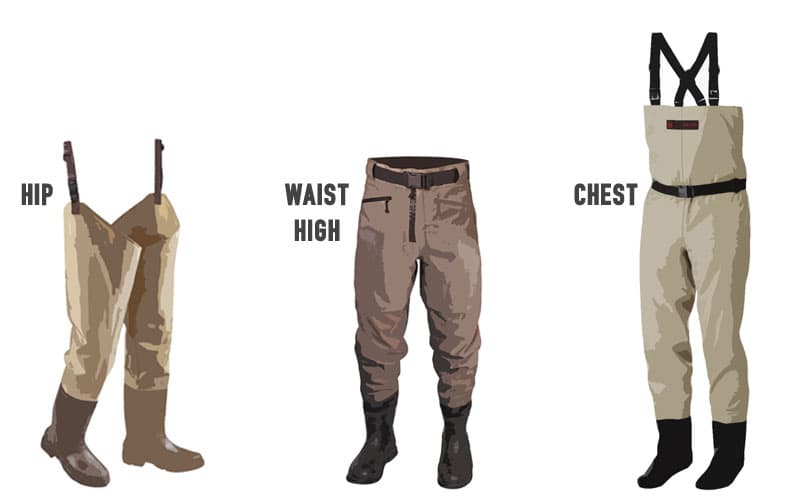
Waders: Waders are available in 3 heights – chest, waist, and hip. A good pair of chest waders is the standard for aquatic collecting and allows the entomologist to collect in waters as deep as their chest while remaining dry. They insulate you, which is advantageous for cold water environments but can cause dehydration in hot Mississippi summers, where hip waders may be a better option for many habitats. Many waders come with a dive belt. This prevents water from filling them from your feet to the top. If you have a dive belt, always wear it correctly. Waders come in 3 boot types: sock foot, hiking foot, and felt foot. Sock foot is the best long-term investment because you aren’t limited by your shoe size for getting a well-fitting wader. Boots are purchased separately, which allows you to replace either the boot or wader when they are worn without needing a new set. Hiking foot is an economical option, especially for men of average build. The boot is part of the wader and has a tread like a muck boot. Felt foot is near-identical to a hard foot, but with a felted bottom to increase traction. Felt foot waders are illegal in some states, as they are thought to transfer diseases and invasive species between waterways. Wet Wading: In many wetlands, or when in a boat, it may be advantageous to wear water shoes and wade without any waders. This is safer when topping waders is a real concern, such as when suitcase sampling or regularly transferring in and out of a boat. Be sure to wear a life jacket when wet wading. |
|



MEM | Info & Services | Museum Personnel | Research Taxa | MEM/ECDYSIS Database | Curatorial Resources
Screening Center |Moth Photographer's Group | Museums in Miniature | Cross Expeditions | Publications/Archives
Mississippi Habitats | Anthropological Entomology | Visitors
Copyright 2006, all rights reserved, Mississippi Entomological Museum, Mississippi State University
For comments and feedback concerning this site contact Joe MacGown at jmacgown@entomology.msstate.edu
Last updated on November 21, 2025
"The views and opinions expressed herein are strictly those of the page author or organization.
The contents of this page have not been reviewed or approved by Mississippi State University."